
Solar Farm Security: Stopping Cable Theft at Remote Solar Sites
The UK is in what industry experts call a "peak period" of solar farm theft — and remote sites are paying the price.
Organised criminal gangs stole over 750 kilometres of cable from UK solar sites between January and August 2024 — across more than 70 reported theft incidents. One Derbyshire solar farm lost £90,000 of string cable across three break-ins in a single month. And this is not opportunistic crime: security specialists describe a "fully industrialised" criminal network that cases sites in advance, runs co-ordinated distraction operations against security patrols, and ships stolen cable abroad through established disposal routes.
The true cost goes far beyond the copper. Once emergency repairs, re-commissioning, lost generation and admin are counted, a single cable theft incident typically costs an operator £250,000 or more — and hit sites are routinely hit again, with one site suffering four thefts in six weeks.
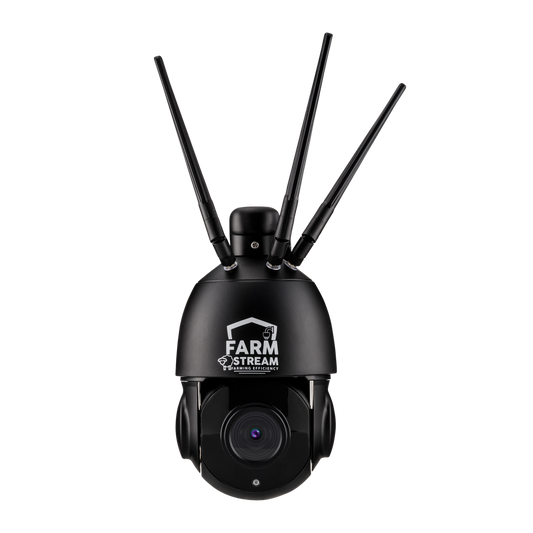
The challenge? Solar farms are exactly the kind of site traditional CCTV struggles with: large open perimeters, no buildings, and — ironically — often no convenient low-voltage power or network infrastructure for cameras. That's why the Farmstream Solar 360 Mini makes such natural sense here: a solar-powered, 4G-connected security camera that runs completely independently of the site it's protecting — and keeps recording even when thieves cut the site's own cabling.
This guide explains how solar farm operators, O&M contractors and landowners are using self-contained solar CCTV to protect remote solar sites from cable theft.
Why Solar Farms Have Become a Prime Target
Solar farms combine three things organised thieves love: high-value copper in enormous quantities, remote unmanned locations, and long perimeters that are impossible to watch by eye. A single row of panels can contain 100+ panels and over a kilometre of string cable — and gangs systematically strip entire rows in a night.
The scale of the problem has grown with the sector itself:
- 70+ theft incidents in eight months: more than 70 solar site thefts were reported in the first eight months of 2024, with over 20% involving cable thefts of at least 20 kilometres.
- 750+ km of cable gone: enough stolen cable in that eight-month period alone to stretch most of the length of Britain — and the trend is accelerating, with 11 incidents reported across seven counties in March–April 2025, against just 3 the month before.
- Industrialised, not opportunistic: security specialists describe "fully industrialised" gangs that conduct hostile reconnaissance, scout sites with drones, test defences with fence cuts and camera damage, and even run deliberate distraction operations to draw security patrols away before the main raid.
- Repeat victimisation is the norm: one Derbyshire site was hit three times in a month, losing £90,000 of cable; another suffered four thefts in six weeks. Gangs return to sites they know are soft.
- The real bill is downtime: beyond the cable itself, a typical incident costs £250,000+ once engineering repairs (£85,000+), weeks of lost generation, and admin are counted — and insurers are responding with rising premiums and strict physical-security conditions on cover.
And with UK solar capacity heading from 18 GW today towards 45–57 GW by 2030, the number of remote, high-copper targets is multiplying every year. The gangs know it.
Common Mistake
Treating the first theft as a one-off. The data says the opposite: one site was hit three times in a month, another four times in six weeks. Gangs return to sites they know are soft — so the weeks after a raid are the highest-risk window of all, and the worst possible time to still be "getting quotes" for security.
Cameras change the economics for the defender in three ways:
- Deterrence: gangs case sites before they strike. Visible cameras on poles, covering the perimeter and each other, tell the reconnaissance team this site records everything — and the next site along doesn't.
- Detection: stripping a row of cable takes hours, not minutes. Instant motion alerts at the fence line turn those hours into response time for keyholders, patrols, or police.
- Evidence: timestamped HD footage of vehicles, plates and faces is what turns an insurance claim into an investigation — and helps forces link incidents to the organised groups behind them.
The problem is that conventional CCTV assumes mains power, network cabinets, and trenched data runs — expensive at a 50-acre site, and useless the moment thieves cut the very cables the system depends on. That's where self-contained solar 4G cameras come in.
Why the Solar 360 Mini Is Ideal for Solar Sites
There's a satisfying irony in guarding a solar farm with solar-powered cameras — but the case is practical, not poetic. The Farmstream Solar 360 Mini is a fully self-contained security camera: its own 26 W panel, its own battery, its own 4G connection. At £199 per unit, a six-camera perimeter costs less than half a percent of one typical theft incident.
Here's why operators and O&M contractors are choosing it:
- Independent of site power: The camera doesn't draw a watt from your arrays or auxiliary supply. If thieves cut strings, trip the site, or take out the DNO connection, the cameras don't notice.
- Independent of site comms: The built-in eSIM auto-connects to the strongest 4G network at your site (EE, Vodafone, Three, or O2) — no NVR, no comms cabinet, no dependence on site SCADA.
- 3MP HD video (2560 × 1920): Sharp enough to identify faces, vehicle details, and — crucially — number plates at the gate.
- 355° pan and 90° tilt: One pole position covers a gate, a stretch of fence line, and the ground between the rows.
- Auto-tracking: Detects human movement and follows intruders automatically as they move along the rows.
- 20–30 m infrared night vision: Clear footage after dark — when virtually all cable theft happens.
- Two-way audio: Challenge intruders through the camera's speaker the moment an alert fires — a live voice at 2 am tells a reconnaissance team everything they need to know about your site.
- Smart push alerts: The whole O&M team, keyholders, and your monitoring provider can all receive alerts — there's no limit on connected devices.
- 64 GB on-board storage: Around 2–3 weeks of continuous 24/7 recording per camera (upgradeable to 256 GB), stored on the camera — not in a cabinet thieves can reach.
- IP66 weatherproof: Built for exposed, windswept sites and everything a UK winter delivers.
- Redeployable in minutes: Shift coverage as risk moves — construction phase to operations, or towards whichever boundary the latest fence cut appeared on.
For long perimeter runs and main entrances, pair the Solar 360 Mini with the Farmstream 360 (4K PTZ) for additional long-range coverage.
Key Features to Look For in Solar Farm CCTV
Solar sites have a specific threat profile: professional gangs, night raids, long perimeters, and hours-long thefts. Here's what actually matters in a solar farm security camera — and how the Solar 360 Mini delivers:
- Power independence: Any camera wired into site power shares the site's biggest vulnerability. A solar-and-battery camera keeps working through cable cuts, outages, and site shutdowns.
- Connectivity independence: Gangs who cut comms cables expect to blind the CCTV. A 4G camera with its own eSIM has nothing on site to cut.
- Instant, shareable alerts: A row strip takes hours — but only if nobody responds. Push alerts to unlimited devices mean keyholders, O&M staff and patrol contractors all know within seconds.
- Number plate capture: Cable leaves in vans and flatbeds. 5MP resolution at the gate turns a vehicle sighting into a traceable plate.
- Auto-tracking: Intruders moving between rows are followed automatically, keeping people — not just headlights — in frame.
- 24/7 on-board recording: Continuous recording to the camera's own SD card means evidence survives even if alerts are missed — and there's no central recorder to steal.
- Two-way audio: A live audio challenge during the reconnaissance visit can end the plan before the raid.
- Remote pan, tilt, and zoom: Sweep the fence line and zoom on a plate from your phone — without a 40-minute drive to site.
- Fast redeployment: Self-contained units move to wherever the threat is — a new fence cut, a construction laydown area, a neighbouring site in the same portfolio.
CCTV That Doesn't Die When the Site Does

Here's the uncomfortable truth about conventional solar farm CCTV: it usually depends on the two things thieves attack first — site power and site cabling.
Gangs targeting solar farms test defences before the main raid: cutting fences, damaging cameras, and probing whether anyone responds. A wired CCTV system that goes dark the moment a supply cable is cut fails exactly when it's needed most.
The Solar 360 Mini is immune to this by design. Each camera ships with a 26 W solar panel (400 mm × 350 mm) and a 2 m cable, charging a built-in battery that carries the camera through the night and overcast spells. Intelligent power management keeps it running year-round, even through the short days of a UK winter — when long dark evenings are precisely when gangs are busiest.
There is no supply to isolate, no cable run to cut, and no cabinet to break open. The site can be completely dead — mid-construction, grid outage, or stripped strings — and the cameras keep recording and keep alerting.
4G Cameras for Sites Without Network Infrastructure
Many solar sites have limited or no spare comms capacity for security systems — and running new data cabling across a large site is expensive trenching work. The Solar 360 Mini connects directly to the mobile network using its built-in eSIM, which auto-switches to the strongest available 4G signal at your site — EE, Vodafone, Three, or O2.
How 4G data works with solar farm cameras:
- Each camera records 24/7 to its internal 64 GB SD card — this uses zero 4G data.
- 4G data is only consumed when you view live or recorded footage through the CamHipro app.
- Push notifications (motion alerts) use negligible data.
Farmstream's 4G Streaming Plan costs £89/year per camera and includes 50 hours of live viewing — ample for alert checks and incident review. Monthly and higher-usage plans are also available.
Every camera is fully unlocked, so operators with existing IoT SIM estates are free to use their own data SIMs instead.
The Cost of Cameras vs the Cost of One Cable Theft
For a solar operator, this is one of the easiest security business cases there is. Set a six-camera deployment against what a single successful raid actually costs:
| Six Solar 360 Minis on site | One successful cable theft | |
|---|---|---|
| Upfront cost | £1,194 (you own them) | £250,000+ typical total incident cost |
| Ongoing cost | £534/year (optional 4G plans) | Weeks of lost generation at ~£2,500/day while repairs complete |
| Repairs | None — self-contained units | £85,000+ engineering and re-commissioning |
| Insurance | Supports physical-security conditions on cover | Rising premiums — repeat-hit sites risk conditions or refusal |
| Deterrent effect | Visible cameras defeat the reconnaissance visit | None — hit sites are hit again (four thefts in six weeks at one site) |
| Evidence | Timestamped HD footage, plates, faces | Usually none — raids discovered next morning |
| You find out | The moment someone reaches the fence — live alert | When generation flatlines overnight |
Six cameras cost less than 0.5% of one typical incident. Even a much larger deployment — a dozen cameras across gates, inverter stations and perimeter — is a rounding error against a single raid, and the units redeploy across your portfolio for years.
Where to Deploy: Perimeters, Gates, Inverters & Cable Runs

The Solar 360 Mini ships with pole mount fixings, screws, and fittings, so deployment across a site is straightforward without specialist tools. Think like the gang's reconnaissance team: they want an approach hidden from the road, a fence section nobody watches, and hours of undisturbed access to the rows. Priority positions include:
- Access gates and tracks: Every raid needs vehicles. A camera on a 3 m pole at each gate captures plates on the way in — and again on the way out with the load aboard.
- Perimeter sections hidden from the road: Rear boundaries backing onto fields and woodland are where fences get cut. Space cameras along these runs, using the 355° pan to sweep both directions of fence line. One Devon site's response to repeat break-ins was an application for 56 pole-mounted cameras — comprehensive perimeter coverage is the direction serious operators are heading.
- Inverter and transformer stations: The highest-value concentrated kit on site, and the natural gathering point for anyone working the rows around it.
- String cable runs: Cameras overlooking the rows themselves catch the theft in progress — auto-tracking follows intruders as they move along the strings.
- Construction laydown areas: Sites under construction or repowering hold cable drums and panels in bulk — prime targets before the fence is even finished.
Mount cameras high and cover each other's approaches. At the top of a 3 m pole, out of arm's reach and fitted with the included anti-tamper bolts, a camera is visible enough to deter and safe from casual interference — and if each camera watches its neighbour's approach, anyone coming for one is recorded by another. Footage is already on board and alerts have already fired by the time anyone reaches a pole.
Important: Mount each solar panel within 2 m of its camera (the cable cannot be extended) and in an unshaded position — rarely a problem on a solar farm.
Top Tip
Walk the site with your phone before you install. Check 4G signal strength at each planned pole position — signal can vary noticeably across a large site, and shifting a pole 20 m at the planning stage is far easier than after the concrete has gone in. The camera's eSIM will pick the strongest of the four networks at each spot.
Setup in Under 10 Minutes per Camera
The Solar 360 Mini is a true plug-and-play solar site camera. No IT involvement, no network configuration, no integration with site systems, and no specialist installer.
Four steps per camera:
- Mount the camera where there's good 4G coverage — high on a pole covering a gate, fence run, or inverter station.
- Mount the solar panel in an unshaded spot within 2 m of the camera.
- Download the free CamHipro app and scan the QR code on the camera.
- Start viewing, recording, and receiving alerts — you're live.
A six-camera site is fully covered in an afternoon. Every camera can be shared with unlimited devices, so asset managers, O&M engineers, keyholders and monitoring providers all see the same alerts and feeds from their own phones.
Top Tip
With multiple cameras on site, name each one by its position in the app — "Gate North", "Rear Fence 2", "Inverter Station" — before the first night. When an alert fires at 1 am, the keyholder should know exactly where to look (and where to point the 999 call) without cross-referencing a site plan.
Building a Layered Defence Against Organised Gangs
Against industrialised criminal groups, cameras work best as part of a layered approach. Industry and police guidance for solar sites consistently recommends combining:
- Monitored CCTV across gates, perimeter and inverter stations — the layer the Solar 360 Mini provides, with alerts shared across your whole response chain.
- Forensic marking of string cable (products such as SmartWater are credited with helping suppress the earlier wave of panel thefts), with signage advertising it.
- Physical delay: sound perimeter fencing, locked and monitored gates, and restricted vehicle access from surrounding fields.
- A response plan: alerts are only useful if someone acts on them. Agree in advance who responds to a 2 am notification — keyholder, patrol contractor, or a 999 call reporting a crime in progress.
- Report everything: including fence cuts, drone activity and suspicious vehicles — hostile reconnaissance precedes the raid, and intelligence links incidents across forces. If a theft is under way, call 999 with vehicle descriptions and registrations from the live feed; never confront the gang in person.
After any incident, export and save the clips promptly (the SD card overwrites oldest footage when full), keep the originals with timestamps intact, and hand footage, plate stills and photographs to the police and your insurer.
Expert Advice
Treat every fence cut, damaged camera, drone sighting or slow-moving vehicle as a precursor, not a nuisance. Industry analysts are clear that gangs test defences and run hostile reconnaissance before the main raid — so a "minor" incident is your warning. Report it to the police, review that night's footage, and re-point or add cameras on the probed boundary immediately.
Case Study: Second Raid Interrupted at a Midlands Solar Site
An O&M contractor looking after a mid-sized Midlands solar site called us after its first cable theft: two rows stripped overnight, discovered when generation flatlined the next morning. The repair bill and lost output ran well into six figures — and the contractor knew from industry warnings that hit sites get hit again.
Within a week, eight Solar 360 Minis went up: one on each of the two gates, two covering the inverter stations, and four spaced along the rear boundary where the original fence cut was found. Total hardware cost: £1,592 — installed by the contractor's own two-man team in a single visit, with alerts shared between the site manager, the asset owner, and the out-of-hours keyholder.

Five weeks later, at just after 1 am, three cameras on the rear boundary fired alerts within a minute of each other: figures at the fence line, then auto-tracking following two intruders moving towards the rows. The keyholder challenged them through the nearest camera's two-way audio while calling 999 with a description of the flatbed waiting in the field behind the boundary. The intruders left without touching a string, and the footage — faces, the vehicle, and its route in — went to the police intelligence team investigating linked thefts across the region.
The site hasn't been touched since. Eight cameras cost less than 1% of the first raid — and this time, there was no second raid.
Legal Considerations & GDPR
CCTV on a commercial solar site watching your own land and infrastructure is well-established practice. Where cameras also capture boundary areas, public rights of way, or neighbouring land, UK GDPR applies:
- Signage: Display clear signs stating CCTV is in operation — at gates and along the perimeter. Signage is also a core part of the deterrent, alongside forensic-marking notices.
- Data control: Store recordings securely and limit access to authorised personnel — straightforward with on-board storage and app-level access control.
- Proportionality: Angle cameras to cover your site, fence line and approaches — not neighbouring homes or unrelated land.
- Corporate operators: Commercial CCTV operators should follow the ICO's CCTV guidance and, where applicable, register with the ICO as a data controller — most operating businesses already are.
The Solar 360 Mini stores all footage locally on its on-board SD card, and remote viewing through the CamHipro app uses a secure encrypted connection — helping operators stay GDPR-compliant while gathering evidence.
FAQs
How much does solar farm security cost?
The Solar 360 Mini is a one-off purchase of £199 per camera. A typical six-camera perimeter deployment costs £1,194 — against a typical cable theft incident cost of £250,000+. The optional 4G streaming plan is £89/year per camera (50 hours of live viewing each), and recording 24/7 to the SD card uses no data at all. Every camera is fully unlocked if you'd prefer to run your own SIMs.
Why do thieves target solar farms?
Copper, in bulk, in remote places. A single row of panels can contain over a kilometre of string cable, sites are unmanned overnight, and stolen cable feeds established scrap and export routes. Over 750 km of cable was stolen from UK solar sites between January and August 2024 alone.
Will the cameras keep working if thieves cut the site's power?
Yes. Each camera runs on its own solar panel and built-in battery and connects over 4G — completely independent of the site's generation, grid connection, and comms. Cutting site cabling has no effect on the cameras: they keep recording and keep alerting.
Do solar farm cameras need WiFi or network infrastructure?
No. The built-in eSIM connects directly to the strongest 4G network at your site. No NVR, no comms cabinet, no trenched data cable, and no dependence on site SCADA.
How many cameras does a solar farm need?
Depends on size and layout — a sensible pattern is one per access gate, one per inverter/transformer station, and cameras spaced along vulnerable perimeter sections, especially boundaries hidden from the road. Because each unit is self-contained, you can cover the highest-risk points first and extend in minutes.
Can CCTV footage be used to prosecute cable thieves?
Yes. Timestamped HD footage of vehicles, number plates, faces and the theft itself is exactly what police need — and because solar cable theft is organised crime, footage also feeds the intelligence picture linking incidents across forces. Export clips promptly and keep the originals with timestamps intact.
Can solar-powered security cameras run all year round in the UK?
Yes. The 26 W solar panel is designed for UK conditions and the built-in battery covers overnight and overcast periods. The camera automatically adjusts its power usage for shorter daylight hours in winter.
How much footage does each camera store?
The included 64 GB SD card holds approximately 2–3 weeks of continuous 24/7 recording, upgradeable to 256 GB. Once full, the oldest footage is automatically overwritten — so always export incident clips promptly.
How do I stop the cameras themselves being stolen?
Mount them 3 m or more up poles with the included anti-tamper bolts, and position cameras to cover each other's approaches — anyone coming for one camera is recorded by another. By then the footage is stored on board and alerts have already reached your team.
Can my O&M contractor and monitoring team share access?
Yes. There's no limit on the number of devices per camera, so asset managers, O&M engineers, keyholders and monitoring providers can all receive alerts and view feeds — whoever's on duty responds.
Protect Your Solar Site Before the Reconnaissance Visit — From £199
The Solar 360 Mini gives you 5MP HD site security with pan, tilt, auto-tracking, night vision, and two-way audio — powered entirely by its own solar panel and connected via 4G. Nothing to trench, nothing to wire into site power, nothing for thieves to cut. A full six-camera perimeter costs £1,194 — less than half a percent of one typical cable theft.

Free UK shipping · Same-day dispatch before 2 pm (Mon–Fri) · 30-day money-back guarantee · UK-based phone support