
Quad Bike & Farm Machinery Theft: Yard Security Guide
The quad is the most-used machine on most farms — and the most-stolen. It starts on a key that lives in the ignition, weighs a few hundred kilos, fits in a Transit, and sells anywhere in the world.
NFU Mutual's latest Rural Crime Report carries good news and bad news. The good news: rural crime overall fell an estimated 6% to £41.5 million. The bad news is where the growth is: quad bike and ATV theft jumped 31% to £3.5 million, and agricultural vehicle theft rose 18% to £8.3 million — with telehandler theft up 38% and tractor theft up 8%. Crime isn't leaving the countryside. It's concentrating on your yard.
And it's organised. NFU Mutual describes rural crime as "more organised than ever": gangs scout farms in advance, strike in minutes, move machinery out of the country fast — and come back for the insurance replacement. In the same report's survey, 79% of NFU Mutual agents said they know farmers who have been repeatedly targeted.
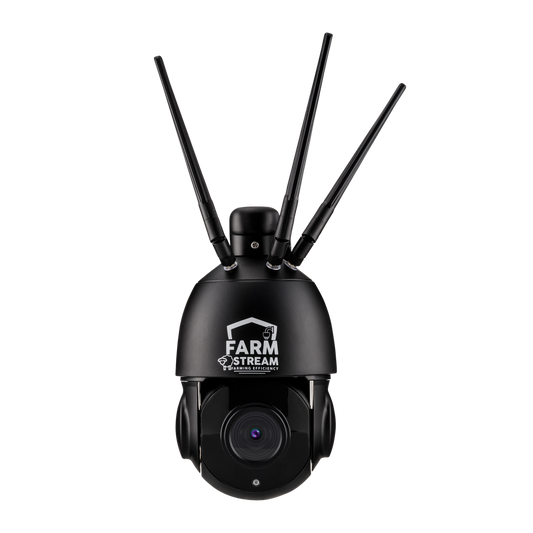
The farm yard has a security problem the rest of the farm doesn't: it holds the most valuable, most movable kit, but the buildings, gateways and back approaches thieves actually use are often beyond the reach of WiFi — and nobody's watching at 2 am. That's exactly why we built the Farmstream Solar 360 Mini — a solar-powered, 4G-connected farm security camera you can put on any gateway, shed or yard entrance with a mobile signal.
This guide covers what the new report means for machinery owners, how thieves actually work a farm yard, and how to build layered security — locks, marking, trackers and farm yard CCTV — before your quad becomes next year's statistic.
The Rural Crime Report: Quad & Machinery Theft Is Rising

Every August, NFU Mutual publishes its Rural Crime Report — the closest thing UK agriculture has to an annual crime census. The headline this year sounds encouraging: total rural crime cost fell 6% to £41.5 million, helped by more than £500,000 of investment in initiatives like the National Rural Crime Unit and 13 new ANPR cameras in rural hotspots. Over £9 million of stolen equipment was recovered — Lincolnshire Police alone clawed back more than £500,000 of kit.
But read past the headline and the picture in the yard is going the wrong way:
- Quad bike and ATV theft: £3.5 million — up 31%, the sharpest rise of any major category in the latest figures.
- Agricultural vehicle theft: £8.3 million — up 18%, including tractor theft up 8% to £1.6 million and telehandler theft up 38% to £773,000.
- Hotspots persist: costs rose 24% in Northern Ireland, 14% in Scotland and 7% in the North East, even as Wales and the Midlands fell 21%.
- The human cost: 91% of NFU Mutual agents say rural crime is disrupting farming in their area, 79% know farmers who have been repeatedly targeted, and 29% have seen farmers leave the industry with rural crime a contributing factor.
The pattern underneath is simple: the things getting stolen more are the things that are valuable, mobile, and kept in yards. A quad is gone in minutes; a telehandler drives itself onto a low-loader. And the one category that collapsed — tractor GPS units, down around 80% to roughly £250,000 — collapsed because the industry made stolen units hard to sell and easy to trace. That's not luck. It's the blueprint. More on it below.
A farm yard camera earns its keep four ways:
- Deterrence: Organised thieves scout before they strike. A visible camera on the yard entrance and CCTV signage at the road gate tells them this farm records everything — and the next farm might not.
- Detection: Smart motion alerts flag a person or vehicle in the yard at 2 am while the quad is still in the shed — not when you find the door forced at morning feeding.
- Evidence: Timestamped HD footage of faces, vehicles and number plates turns "someone had it away in the night" into a case police — and the ANPR network — can actually run with.
- Reassurance: A sweep of the yard from your phone at 11 pm — shed doors shut, quad where you left it, nothing moving — without pulling your boots back on.
How Thieves Target Farm Yards
The quad thief of farm-gate folklore — a chancer who spots an open shed — still exists. But the growth in the numbers is coming from something more professional. NFU Mutual's rural affairs specialists describe criminals "prepared to go to extreme lengths", and the pattern reported by farmers is remarkably consistent:
- They scout first. The unfamiliar car idling in the gateway, the "scrap collector" cold-calling, the drone overhead — reconnaissance visits establish what kit you have, where it lives, and how you secure it.
- They strike fast. Farmers who have watched their own CCTV back describe quads gone in a few minutes — in the yard, loaded, and away before anyone stirs.
- They come at night, off the road. Back lanes, field gateways and rear approaches let a van reach the yard without passing the farmhouse window.
- They come back. This is the pattern that stings most: thieves return to farms they've already hit to take the insurance replacement — they know the layout, the security, and roughly when the new quad arrives. It's why 79% of NFU Mutual agents know repeatedly targeted farmers.
Each stage of that playbook is a point where a camera changes the outcome. The scouting visit gets recorded — and a farm that visibly records gets scouted off the list. The 2 am arrival triggers an alert while there's still time to put lights on, speak through the camera, and call 999 with a crime in progress rather than a report for the morning. And the van, the faces and the plates are on film either way.
Layered Yard Security: Keys, Locks, Marking & Trackers
No single measure stops an organised gang, and anyone selling you one gadget as the whole answer is selling you short. Police rural crime teams and NFU Mutual's own guidance all point the same way: layers. Make the yard slower to work, louder to enter, and riskier to sell from — and the professionals go elsewhere.
- Keys out, doors locked. The single cheapest fix on any farm: never leave keys in machines, store them locked away from the yard, and put quads and compact kit inside a locked building overnight, out of sight of the road.
- Physical barriers. Lockable gates on the yard entrance, ground anchors and chains for quads, wheel clamps or steering locks on anything that has to live outside, and robust locks on sheds, workshops and fuel stores.
- Marking and registration. CESAR marking, forensic marking kits and postcode marking make your kit traceable and hard to sell on. Photograph everything, record serial numbers, and register high-value items. The Equipment Theft (Prevention) Act 2023 was written to push exactly this — immobilisers and forensic marking on new ATVs, and registration that makes stolen kit toxic to handle.
- Trackers and immobilisers. A hidden GPS tracker with geofence and tamper alerts is the difference between an insurance claim and a recovery — NFU Mutual has gone as far as piloting free trackers and immobilisers with Yamaha and Honda for quad theft victims, precisely because of repeat targeting.
- Eyes on the yard. CCTV with night vision covering the yard, its entrances and its approaches — plus signage at the road gate. This is the layer that deters the scout, catches the attempt in progress, and documents everything for police and insurers.
- Community intelligence. Join your local Farm Watch or WhatsApp group, log suspicious vehicles (registration, date, time), and report scouting behaviour to your force's rural crime team on 101.
Most of those layers are padlocks-and-paperwork cheap. The one that historically wasn't — proper CCTV across a sprawling yard, gateways and outbuildings — is the one solar 4G cameras have changed completely.
Why the Solar 360 Mini Is Ideal for Farm Yards
The Farmstream Solar 360 Mini was designed for exactly these conditions. At just £199 — around 2% of the price of a new quad — it's a fully self-contained security camera that runs entirely on solar power and connects via 4G. No wiring, no broadband, and no electrician needed, which matters when the spots that need watching are the back gateway and the far shed, not the farmhouse porch.
Here's why machinery owners are choosing it:
- Completely off-grid: The included 26 W solar panel and built-in battery keep the camera running 24/7 — even through overcast UK winters, when long nights are exactly when machinery theft peaks.
- No WiFi needed: The built-in eSIM auto-connects to the strongest 4G network in your area (EE, Vodafone, Three, or O2) — so the back gateway gets the same coverage as the yard.
- 3MP HD video (2560 × 1920): Sharp enough to identify faces, clothing, vehicles and number plates in the gateway.
- 355° pan and 90° tilt: Cover the yard entrance, the shed doors and the fuel store from a single camera position.
- Auto-tracking: Detects movement and automatically follows a person — or a van — moving through the yard.
- 20–30 m infrared night vision: Clear footage after dark, when nearly all machinery theft happens.
- Two-way audio: Tell a 2 am visitor, in your own words, that the police are on their way — from your bed, not the yard.
- Smart push alerts: Get notified on your phone the moment a person or vehicle enters the yard.
- 64 GB on-board storage: Records approximately 2–3 weeks of continuous 24/7 footage (upgradeable to 256 GB).
- IP66 weatherproof: Built for exposed yards, driving rain, and everything a UK winter throws at a gable end.
- Portable and relocatable: Move it between the yard, the grain store at harvest, and the lambing shed in spring — in minutes.
For bigger yards and long approaches, pair the Solar 360 Mini with the Farmstream 360 (4K PTZ) for additional long-range coverage of the drive and road frontage.
Key Features to Look For in Farm Yard CCTV
Not all security cameras suit a working farm yard. Here's what matters most when choosing farm security cameras for machinery protection — and how the Solar 360 Mini delivers:
- No power dependency: Solar with built-in battery means no trenching cable to the back gateway or paying an electrician to wire the Dutch barn. The Solar 360 Mini includes a 26 W panel designed specifically for UK light conditions.
- No WiFi dependency: 4G connectivity with an auto-switching eSIM means coverage is decided by mobile signal, not by how far your router reaches — including outlying yards and rented buildings.
- Instant motion alerts: The difference between interrupting a theft and reporting one. An alert while the van is still being loaded gives you and the police a chance; anything else is just a record of what it cost.
- 24/7 recording: Continuous recording to the on-board SD card means the scouting visit on Tuesday is on file when the theft happens on Friday — even if you never opened the app in between.
- Night vision that works: Machinery theft is overwhelmingly a nighttime crime. Infrared coverage of the yard entrance and shed doors is non-negotiable.
- Remote pan, tilt, and zoom: Sweep the whole yard from your phone — gateway, shed fronts, fuel tank, diesel bowser — without leaving the house.
- Two-way audio: A challenge through the speaker — by name of the farm, at night, unexpected — is remarkably effective at turning vans around.
- Number plate capture: Organised thieves arrive on wheels. 5MP resolution resolves plates in the gateway, infrared keeps them readable after dark, and plates are what plug into the ANPR network that's now watching rural hotspots.
- Multi-user access: Share camera access with family, staff and neighbours in the Farm Watch — there's no limit on connected devices, so whoever's nearest can respond to an alert.
Solar + 4G: Cameras Where Thieves Come From, Not Where WiFi Reaches

Plenty of farms already have a camera or two — usually a WiFi doorbell on the farmhouse and maybe a wired camera on the nearest shed. The problem is that thieves don't arrive at the front door. They come up the back lane, through the field gateway, into the far end of the yard — the places where WiFi died two hundred metres ago and there's no socket on the nearest post.
The Solar 360 Mini removes both constraints. It ships with a 26 W solar panel (400 mm × 350 mm) and a 2 m cable, so you mount the panel in an unshaded spot near the camera and you're done — the built-in battery covers nights and cloudy spells, with intelligent power management keeping it running through the shortest days of winter. And it connects directly to the mobile network using its built-in eSIM, auto-switching to the strongest available 4G signal.
How 4G data works with farm yard cameras:
- The camera records 24/7 to its internal 64 GB SD card — this uses zero 4G data.
- 4G data is only consumed when you view live or recorded footage through the CamHipro app.
- Push notifications (motion alerts) use negligible data.
Farmstream's 4G Streaming Plan costs just £89/year and includes 50 hours of live viewing — more than enough for nightly yard checks and reviewing any incidents. Monthly and higher-usage plans are also available, and the camera is fully unlocked if you'd rather use your own data SIM.
Tractor GPS Theft: The 80% Lesson
Two years ago, tractor GPS theft was rural crime's boom category — gangs stripping £10,000 receivers and screens from tractor roofs in waves, with claims running into the millions. In the latest report it's the collapse story: GPS theft claims fell around 80% to roughly £250,000.
That didn't happen because gangs retired. It happened because the industry systematically ruined the market: forensic marking, PIN activation, serial-number registration and targeted enforcement made a stolen unit hard to sell and easy to trace — and the Equipment Theft (Prevention) Act 2023 put marking and registration on a statutory footing. Thieves respond to risk. Raise it, and they move on.
Two takeaways for your yard:
- Keep doing the GPS basics — the 80% fall is a reason to keep removing screens and receivers overnight, locking them away, PIN-protecting and marking them, not a reason to relax. The kit is still worth thousands, and habits are what changed the numbers.
- Apply the same logic to the whole yard. Marking made GPS units risky to sell; cameras make your yard risky to enter. A gang that scouts a farm and finds signage, a visible camera on the entrance, and no line of sight to what's in the sheds is pricing in risk — and there's an easier farm down the road. The 31% rise in quad theft is, in part, displacement: the effort moved to targets that were still soft. The job is to not be one.
What a Camera Costs vs What a Theft Costs
Farm yards are where the numbers get uncomfortable, because the kit is the business. Here's how the costs actually compare:
| Solar 360 Mini | Installed Wired CCTV | |
|---|---|---|
| Upfront cost | £199 (you own it) | Installation, trenching & cabling (typically £1,000+ per camera position) |
| Ongoing cost | £89/year (optional 4G plan) | Maintenance contracts, electricity |
| Covers off-grid gateways & outbuildings | Yes — solar + 4G, anywhere with signal | Only where power & cabling reach |
| Coverage hours | 24/7 recording + smart alerts | 24/7 |
| Moves with the work | Yes — relocate in minutes | No — fixed positions |
| Remote access via app | Yes — free CamHipro app, unlimited users | Sometimes (extra cost) |
| Self-install | Yes — under 10 minutes | No — engineer visit required |
Now put £199 against the other side of the ledger. A new quad is £8,000–£15,000; the ATVs thieves increasingly prefer run two to three times that. A telehandler is a six-figure machine. Then add what the claim doesn't cover: the excess, the premium impact, the days without the machine in the middle of lambing or harvest, and the strong odds — established enough that NFU Mutual built a scheme around it — that the same gang comes back for the replacement. Covering the yard entrance, the machinery shed and the back gateway is £597, once — and every camera is still yours next season, wherever the work goes.
Where to Mount: Yard Entrances, Machinery Sheds & Gateways

The Solar 360 Mini ships with pole mount fixings, screws, and fittings — so installation around the yard is straightforward without specialist tools. Common mounting locations for machinery security include:
- The yard entrance: The single most valuable position. Every vehicle that enters — legitimate or otherwise — passes one pinch point. A camera and CCTV signage here deters the scout, and records the plate of anyone who ignores it.
- The machinery shed: Cover the doors of the building where the quad, tools and GPS-equipped tractors live. Auto-tracking follows anyone moving along the shed front, and the alert fires the moment they step into frame.
- The back gateway and rear approaches: Thieves prefer the route that avoids the farmhouse. A self-contained solar camera on the field gateway or back lane covers the approach nobody wires up — which is exactly why it's the approach thieves choose.
- Fuel tanks and workshops: Diesel and hand tools are the quiet, repeated losses between the headline thefts. A camera covering the bowser and workshop door earns its keep even in a year nobody tries for the quad.
- Outlying yards and rented buildings: Kit stored away from the main holding is checked least and targeted most. Solar plus 4G means a distant yard gets the same oversight as the home one.
Mount it high. A camera at head height invites tampering; a camera at 3–4 m on a pole or gable end — well out of arm's reach — is visible enough to deter, safe from interference, and still close enough to identify a face and a plate. Use the included anti-tamper bolts, and angle cameras so they cover each other's approaches where you run more than one.
Because the Solar 360 Mini is completely self-contained, you can relocate it in minutes — yard entrance through winter, grain store at harvest, lambing shed in spring. No rewiring, no reconfiguration. The camera reconnects to 4G automatically.
Important: Mount the solar panel within 2 m of the camera (the cable cannot be extended) and ensure it's positioned in an unshaded spot for reliable charging — worth remembering on north-facing gable ends, where mounting the panel round the corner usually solves it.
Setup in Under 10 Minutes
The Solar 360 Mini is a true plug-and-play farm yard camera. No IT knowledge, no network configuration, and no specialist installer required.
Four steps to get your yard watched:
- Mount the camera where there's good 4G coverage — yard entrance, shed gable, or back gateway.
- Mount the solar panel in an unshaded spot within 2 m of the camera.
- Download the free CamHipro app on your phone and scan the QR code on the camera.
- Start viewing, recording, and receiving alerts — you're live.
Multiple devices can connect to the same camera, so you, your family, and staff can all get alerts and view the feed from their own phones. There's no limit on the number of users per camera.
Case Study: The Farm That Got Hit Twice
A livestock farmer in the North East — one of the report's persistent hotspot regions — lost a two-year-old quad from the machinery shed in the early hours of a November morning. No witnesses, no description, no case: the police report was filed and the insurance paid out. Eleven weeks later, with the replacement quad barely run in, a van was seen reversing away from the yard gate at 1 am. The second attempt was no coincidence — it almost never is.
Before the second attempt, he'd made three changes: a Solar 360 Mini on the yard entrance, a second unit covering the machinery shed doors and back gateway, and CCTV signage on the road gate. The replacement quad also got a hidden tracker and a ground anchor — layers, not gadgets.
The 1 am motion alert reached his phone before the van reached the shed. Yard lights on, a voice through the camera's two-way audio, and a 999 call with a crime in progress — the van left empty. The footage gave police a plate that was already known to the regional rural crime team, and the clip joined an active investigation rather than a filing cabinet.
Since then, the cameras have mostly recorded quieter things: deliveries, the postman, and one memorable escaped bullock. Which is the point — the yard went from soft target to recorded, challenged and risky, and the traffic moved on.
Total cost for two Solar 360 Mini cameras: £398. About 4% of the quad they protect — and the cameras are his for good.
What to Do After a Theft: Police, Trackers & Insurance
If the worst happens, what you do in the first hours determines whether the kit comes back — and whether the gang does:
- Call the police: 999 if a theft is in progress, 101 to report it afterwards — and insist on a crime reference number. Mention CESAR numbers and forensic marking when you report: marked kit is what the £9 million of recoveries was built on.
- Activate the tracker immediately: Stolen machinery moves fast — often out of the region within hours and out of the country within days. Every minute counts.
- Export your footage promptly: Save clips of the people, the vehicles and the plates, with timestamps intact, and keep the originals. Check back through earlier footage too — the scouting visit is often on file days before the theft. The camera's SD card overwrites oldest footage first, so don't leave it weeks.
- Circulate the details: Serial numbers, photos and the van's description to your Farm Watch group and local machinery dealers — second-hand quads surface quickly, and the farming grapevine has recovered more than one.
- Tell your insurer: Provide the crime reference, photographs, serial numbers and footage. A clear recording removes any argument about what was taken, when, and how.
- Harden the yard before the replacement arrives: This is the step most farms miss and most gangs count on. New locks, a tracker on the new machine, and cameras on the entrance and shed — in place before the new quad is.
One more point on filming: you can operate CCTV on your own yard and land, provided you comply with UK GDPR — clear signage at the entrances, cameras angled to cover your property rather than the neighbour's or the public road, footage stored securely with access limited to authorised people. The Solar 360 Mini stores all footage locally on its on-board SD card, and remote viewing through the CamHipro app uses a secure encrypted connection — helping you stay compliant while protecting the kit.
FAQs
How can I stop my quad bike being stolen from the farm?
Layer your defences: lock the quad out of sight in a secured building, remove the keys and store them separately, fit a tracker and immobiliser, apply CESAR or forensic marking, and cover the yard and its approaches with CCTV. A visible camera at the yard entrance deters the scouting visit that precedes most thefts — and motion alerts give you the chance to intervene while there's still something to intervene in.
Why do quad bike thieves come back after a theft?
Because they know the layout, they know your security, and they know the insurance replacement is coming. NFU Mutual has warned repeatedly that thieves return for replacement quads — sometimes within weeks. The period straight after a theft is when your yard security should be at its strongest.
How much does a farm yard security camera cost?
The Solar 360 Mini is a one-off purchase of £199. The optional 4G streaming plan is £89/year (50 hours of live viewing). Recording 24/7 to the SD card uses no data at all, and the camera is fully unlocked if you'd prefer to use your own SIM.
Do I need WiFi or mains power for farm yard CCTV?
No. The Solar 360 Mini runs entirely on its included 26 W solar panel and built-in battery, and connects directly to 4G using its built-in eSIM — which auto-selects the strongest network in your area. That means the camera goes where thieves come from — the back gateway, the far shed, the fuel store — not just where the farmhouse WiFi reaches.
What is the Equipment Theft (Prevention) Act 2023?
Legislation designed to make stolen ATVs and machinery harder to sell — providing for immobilisers and forensic marking on new quads and ATVs, and marking and registration of equipment such as removable GPS units. The same mark-and-register approach is credited with helping drive tractor GPS theft down around 80% in the latest NFU Mutual figures.
How do I protect my tractor GPS from theft?
Remove detachable screens and receivers whenever the machine is parked up and lock them away separately, activate the PIN code, forensically mark units, record serial numbers, and park machinery inside a locked building covered by CCTV. The 80% fall in GPS theft claims followed exactly these habits becoming widespread — keep them up.
What should I do if my quad or machinery is stolen?
Call 999 if the theft is in progress (101 afterwards) and get a crime reference number, activate any tracker immediately, export camera footage with timestamps intact — including earlier footage of possible scouting visits — give police serial and CESAR numbers, notify your insurer, and harden the yard before the replacement machine arrives.
Will a solar camera work in a farm yard all year round?
Yes. The 26 W solar panel is designed for UK light conditions and the built-in battery covers overnight and overcast periods. The camera automatically adjusts its power usage during shorter daylight hours — so it runs right through the long-night winter months when machinery theft peaks.
How much footage can the camera store?
The included 64 GB SD card holds approximately 2–3 weeks of continuous 24/7 recording. You can upgrade to a 256 GB card for longer retention. Once full, the oldest footage is automatically overwritten — so export clips of any incident promptly.
Can farm yard CCTV help with my insurance?
Many insurers look favourably on yards with verified 24/7 CCTV, trackers and forensic marking, particularly for high-value machinery — and clear footage makes any claim faster and less contestable. Always check the specifics with your provider.
Protect Your Yard Before the Van Arrives — From £199
The Solar 360 Mini gives you 5MP HD farm yard security with pan, tilt, auto-tracking, night vision, and two-way audio — powered entirely by solar and connected via 4G. No WiFi, no mains power, no specialist installation. Mount it on the yard entrance and the machinery shed, and every visitor, every vehicle, and every 2 am attempt is on record. At £199, it costs around 2% of the quad it protects — and it protects everything else in the yard too.

Free UK shipping · Same-day dispatch before 2 pm (Mon–Fri) · 30-day money-back guarantee · UK-based phone support