
Micro Hydro Scheme Monitoring: Remote Cameras for Intakes & Turbine Houses
Every micro hydro operator knows the drill: heavy rain overnight, and by morning you're wondering whether the intake screen is buried under leaves and branches — or whether you'll burn half a day driving out to find it's fine.
Remote monitoring solves exactly this. The British Hydropower Association's guide to UK mini-hydro developments recommends remote monitoring for schemes without an operator on site, and monitoring specialists point out that spotting a drop in output remotely is what triggers an on-site inspection. But an output graph only tells you that something is wrong. A camera on the intake tells you what — a blocked screen, a debris raft against the weir, or nothing at all.
And there's a second reason to point a camera at your scheme. A turbine house is a shed full of copper in a remote valley, and organised metal thieves have discovered renewable energy sites: nine copper cable thefts were reported at UK wind farms in the months after April 2025 alone, with gangs forcing open turbine doors, isolating supplies, and stripping the cabling. Remote hydro schemes share the same risk profile: valuable metal, no one around, and a long drive for anyone responding.
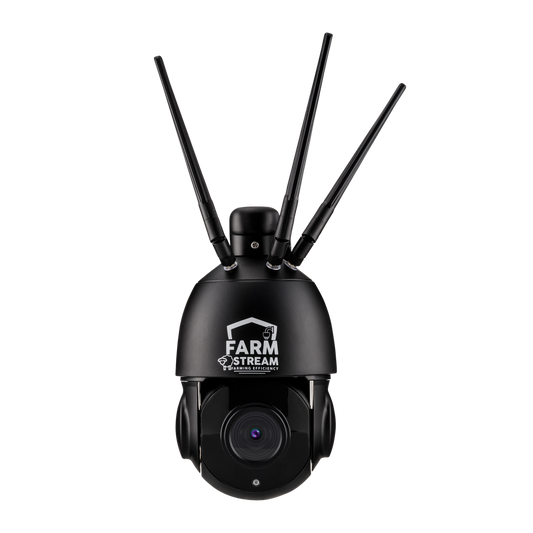
The Farmstream Solar 360 Mini covers both jobs with one £199 unit: a solar-powered, 4G-connected camera that needs no mains power, no WiFi and no trenching — ideal for an intake half a kilometre up the hill from the nearest socket.
This guide explains how hydro scheme owners, community energy groups and off-grid households are using self-contained solar CCTV to monitor intakes and protect turbine houses.
Why Micro Hydro Schemes Need Eyes on Site
Micro hydro is wonderfully low-maintenance right up until the weather turns. Then the same storm that fills your penstock also fills the river with leaves, branches and silt — and the intake screen that keeps debris (and fish) out of your turbine becomes the scheme's single point of failure.
The operational problem is well known to anyone who runs a scheme:
- Blockages happen exactly when generation should be best. High flows carry the most debris, so the screen clogs precisely when the river is giving you the most water — and every hour it stays blocked is your best generating water going over the weir instead of through the turbine.
- You can't see the problem from home. A generation dashboard shows output dropping, but as monitoring specialists note, remote output data is only the trigger for an on-site inspection. Is it a blocked screen, an air lock, a tripped inverter, or just low flow? Without a camera, the only way to know is the drive.
- Access is the whole problem. Intakes sit up steep tracks, across fields, and — for many schemes — a proper walk from anywhere you can park. The Centre for Alternative Technology's guidance is blunt about upkeep: "the turbine should be easily accessed to remove weed build up" — and in practice the screen needs checking far more often than it needs clearing.
- The asset justifies it. A professionally installed scheme costs between £5,000 and £10,000 per kilowatt. Even a modest 15 kW scheme is a six-figure asset earning its keep daily — watched over, typically, by nobody at all.
That's the operational case. The BHA's mini-hydro guide recommends remote monitoring for any scheme that doesn't have an operator on site — and a camera is the simplest, cheapest form of remote monitoring there is.
Common Mistake
Relying on the generation dashboard alone. Output data tells you something is wrong hours after it started — and tells you nothing about what it is. Operators without a camera end up making precautionary site visits after every storm "just in case", which is exactly the routine a £199 camera exists to end.
Then there's security. The turbine house holds the generator, control panels, inverters and a building's worth of copper cabling — and it sits unmanned in the kind of remote spot organised metal thieves now actively seek out. The warning from the wind sector is stark: nine copper theft offences at UK wind farms were reported in the months following April 2025, with gangs forcing turbine doors, isolating the electricity supply, and stripping cable from live sites — behaviour that shows real familiarity with the infrastructure. Security specialists describe the involvement of organised gangs as having "dramatically increased". A remote turbine house is a softer target than any wind turbine: easier to force, further from help, and rarely alarmed.
Why the Solar 360 Mini Is Ideal for Hydro Schemes
The Farmstream Solar 360 Mini is a fully self-contained camera: its own 26 W solar panel, its own battery, its own 4G connection. At £199 per unit, it's the cheapest piece of monitoring equipment on your scheme by an order of magnitude — and the only one that shows you a picture.
Why it suits hydro sites specifically:
- No power needed at the intake: The irony of hydro is that the intake — the part that most needs watching — is usually furthest from any usable power. The Solar 360 Mini runs entirely on its own panel and battery.
- No WiFi, no comms cabling: The built-in eSIM auto-connects to the strongest 4G network at your site (EE, Vodafone, Three, or O2) — no need to run anything down the valley.
- 5MP HD video (2560 × 1920): Sharp enough to see individual branches on the screen bars — and faces and number plates at the turbine house.
- 355° pan and 90° tilt: One position covers the screen, the weir and the approach; sweep between them from your phone.
- 20–30 m infrared night vision: Check the screen during the storm, not after it — and catch intruders in the hours they actually come.
- Auto-tracking & smart alerts: Human movement at the turbine house at 2 am triggers instant push alerts to every connected phone — with no limit on devices, the whole operations rota is notified at once.
- Two-way audio: Challenge anyone at the turbine house door through the camera's speaker, from wherever you are.
- 64 GB on-board storage: Around 2–3 weeks of continuous 24/7 recording (upgradeable to 256 GB), stored on the camera itself.
- IP66 weatherproof: Built for spray, storms and everything a Welsh or Highland winter delivers.
- Redeployable in minutes: Move it from intake to turbine house to access track as the season and the risk change.
For larger schemes with a long access track or a wide head pond, pair the Solar 360 Mini with the Farmstream 360 (4K PTZ) for additional long-range coverage.
Intake Screen Monitoring: See the Blockage Before It Costs You

This is the killer application, and it's operational rather than security. Mount a Solar 360 Mini on a pole or tree line overlooking the intake, and the daily screen check becomes a ten-second glance at your phone:
- After heavy rain: Open the app, look at the screen. Clear? Back to breakfast. Buried? Now the trip is worth making — and you know to bring the rake.
- During the storm: Night vision and an IP66 housing mean you can watch the debris raft building in real time and time your visit for first light, rather than discovering the blockage two days of lost generation later.
- Leaf fall season: In October and November, when screens can clog daily, remote checking turns a daily drive into a daily glance — and the camera pays for itself in fuel and hours alone.
- Compliance peace of mind: Your abstraction licence and fish screening arrangements assume the screen is doing its job. A camera gives you a timestamped visual record that it is — and early warning when it isn't.
Pan and tilt earn their keep here: sweep from the screen to the weir crest to check river level, then across to the head pond, all from the sofa. Many operators find the camera becomes their de facto flow gauge — a glance at the weir tells you more than any number.
Top Tip
Position the camera so one frame captures both the intake screen and the weir crest. The screen tells you whether you need to visit; the weir tells you whether it's worth generating at all. Two answers, one glance — and after a few weeks you'll read river level from that image as accurately as any gauge board.
Turbine House Security: A Shed Full of Copper in a Remote Valley

Look at your turbine house the way a metal thief would: a small, unalarmed building, a generator wound with copper, control panels, inverters and cable runs, no neighbours, and a getaway track nobody watches. The wind industry's recent experience shows what happens when organised gangs turn their attention to renewables — turbine doors forced, supplies isolated, and copper stripped from multiple turbines in a single visit, across counties from North Yorkshire to Essex.
For a hydro scheme, the loss isn't just the metal. A stripped generator or control panel can put the scheme offline for months while replacements are sourced — on kit that may have cost £5,000–£10,000 per installed kilowatt — and insurers increasingly expect to see physical security measures on unmanned generation sites.
A camera on the turbine house changes the calculation:
- Deterrence: A visible camera above the door, with signage, tells anyone scouting the valley that this site records and alerts.
- Detection: Motion alerts the moment someone approaches the door — not when you next visit and find it hanging open.
- Intervention: A live voice through the two-way audio at 2 am — "you're being recorded, police have been called" — ends most visits on the spot.
- Evidence: Timestamped 5MP footage of faces, vehicles and plates on the access track is exactly what police and insurers need.
Expert Advice
Don't wire the camera into the turbine house supply, even though it's right there. A camera powered by the scheme goes dark the moment thieves isolate the supply — which the wind farm incidents show is now standard practice for organised gangs. A self-powered solar camera keeps recording and keeps alerting through exactly the attack it exists to catch.
4G Cameras for Sites With No Power or WiFi at the Intake
Hydro schemes live in valleys, and valleys are where WiFi goes to die. The Solar 360 Mini connects directly to the mobile network using its built-in eSIM, which auto-switches to the strongest available 4G signal at your site — EE, Vodafone, Three, or O2. That multi-network flexibility matters in steep terrain, where one network's mast happens to line up with your valley and the other three don't.
How 4G data works with hydro monitoring cameras:
- Each camera records 24/7 to its internal 64 GB SD card — this uses zero 4G data.
- 4G data is only used when you view live or recorded footage through the CamHipro app.
- Push notifications (motion alerts) use negligible data.
Farmstream's 4G Streaming Plan costs £89/year per camera and includes 50 hours of live viewing — far more than a daily ten-second screen check uses. Every camera is fully unlocked, so you're free to fit your own SIM instead.
Top Tip
Test 4G signal at the intake and the turbine house before you fix anything — walk the site checking your phone, but remember the camera's eSIM can use all four networks, so a spot where your own phone struggles may still work fine. If the intake really is in a dead spot, moving the camera 20–30 m up the bank often finds signal while keeping the screen in frame at full zoom.
The Cost of Cameras vs Wasted Trips and Lost Generation
Set a two-camera deployment against what a single winter of blind operation actually costs:
| Two Solar 360 Minis on the scheme | Running blind | |
|---|---|---|
| Upfront cost | £398 (you own them) | £0 — but every question needs a site visit |
| Screen checks | Ten seconds on your phone, any hour, any weather | A drive and a walk — after every storm, all winter |
| Blockages | Spotted as they build; cleared at first light | Discovered days later via the output graph — best generating water already lost |
| Turbine house | Alerts, live audio challenge, HD evidence | Break-in found at next visit; months offline if the generator is stripped |
| Insurance | Demonstrable security on an unmanned site | Harder conversations after a claim |
| Ongoing cost | £178/year (optional 4G plans) | Fuel, hours and lost generation, every year |
Against a scheme that cost £5,000–£10,000 per kilowatt to build, £398 of cameras is a rounding error — and unlike almost everything else on the scheme, they pay you back in saved trips within the first winter.
Where to Deploy: Intake, Turbine House & Access Track
The Solar 360 Mini ships with pole mount fixings, screws, and fittings, so deployment is straightforward without specialist tools. Priority positions for a typical run-of-river scheme:
- Overlooking the intake screen: The operational workhorse. Frame the screen, weir crest and head pond together if the geometry allows. A 3 m pole set back on the bank usually beats mounting hard against the intake — wider view, safer from flood debris, and better solar exposure.
- On or facing the turbine house: Cover the door and the natural approach. Mount at 3 m with the included anti-tamper bolts.
- On the access track or gate: For schemes with a history of unwanted visitors, a camera at the track entrance captures vehicles and plates before anyone reaches the infrastructure.
- Along the penstock route: Rarely needed day-to-day, but worth a redeployable camera during any period of ground works, pipe repairs or contractor access.
Two siting rules specific to hydro sites: mount each solar panel within 2 m of its camera (the cable cannot be extended) and in the sunniest spot the position allows — in a steep wooded valley, that usually means the south-facing bank, above the tree shade line. And mount everything above known flood levels: the same storm you most want to watch is the one that redraws the riverbank.
Setup in Under 10 Minutes per Camera
The Solar 360 Mini is a true plug-and-play camera. No electrician, no network configuration, no integration with the scheme's control system.
Four steps per camera:
- Mount the camera where there's good 4G coverage — overlooking the intake or covering the turbine house.
- Mount the solar panel in an unshaded spot within 2 m of the camera.
- Download the free CamHipro app and scan the QR code on the camera.
- Start viewing, recording, and receiving alerts — you're live.
A full intake-plus-turbine-house setup is done in a single visit — usually quicker than one round trip to check a screen the old way.
Community Hydro: One Camera, a Whole Volunteer Rota
Community energy groups run some of the best-loved hydro schemes in the country — and almost all of them run on volunteer time. That makes the economics of a camera even better than for a private owner: the "cost" of a blind site visit is a volunteer's evening, and volunteer goodwill is the one resource no scheme can afford to waste.
Because the Solar 360 Mini supports unlimited connected devices, the whole operations rota can share every camera. Whoever holds the phone that week checks the intake after rain; everyone gets the alert if someone approaches the turbine house; and the committee gets a live picture of their scheme for open days, funders and the village newsletter. Several groups also find the intake camera doubles as a genuinely engaging public window on the scheme — nothing communicates "your community owns a hydro" like watching it work.
Case Study: Storm Blockage Spotted From the Sofa
A smallholder running a 22 kW high-head scheme in mid-Wales contacted us after a familiar winter: a 40-minute round trip up the hill after every named storm, and one November week where a blocked screen went unnoticed for three days — his best generating week of the month, mostly lost over the weir.

He fitted two Solar 360 Minis: one on a pole on the south bank overlooking the intake screen and weir crest, one above the turbine house door. Total cost: £398, installed by himself in an afternoon, with alerts shared to his and his wife's phones.
The first storm of the season made the case. At 11 pm, with the rain still hammering, he panned the intake camera across the screen from the sofa: a raft of branches building on the left-hand bars. He was there at 7 am with the rake — screen cleared in twenty minutes, turbine back to full flow before the morning peak, and the rest of the storm's water went through the turbine rather than over the weir. By his own reckoning, the cameras paid for themselves before Christmas — in diesel and dry evenings alone.
The turbine house camera earned its keep in February, when a late-night alert showed a vehicle idling at the track entrance. A word through the two-way audio — and the vehicle left. Nothing was touched, and the clip went to the local rural crime team the next morning.
Legal Considerations & GDPR
Cameras watching your own intake, turbine house and access track on your own land are well-established practice. Where a camera also captures a public footpath, a neighbour's land, or river users, UK GDPR and common courtesy both apply:
- Signage: Display clear signs stating CCTV is in operation — at the track entrance and on the turbine house. Signage is also half the deterrent.
- Proportionality: Angle cameras to cover your infrastructure and its approaches — not the footpath itself, passing canoeists, or neighbouring property.
- Data control: Footage stays on the camera's own SD card, with app-level access control — straightforward to keep secure and limit to the people who need it.
- Community groups: If your scheme is run by a society or company, follow the ICO's CCTV guidance and check whether you should be registered as a data controller — most incorporated groups already are for other reasons.
Remote viewing through the CamHipro app uses a secure encrypted connection, helping keep the scheme compliant while gathering evidence.
FAQs
How can I monitor my hydro intake screen remotely?
Mount a solar-powered 4G camera overlooking the intake and check the screen from your phone. The Solar 360 Mini needs no mains power and no WiFi — it runs on its own panel and battery and connects over 4G, so it works at intakes far from any socket. Only drive to site when there's actually something to clear.
How much does hydro scheme monitoring cost?
The Solar 360 Mini is a one-off purchase of £199 per camera. A typical two-camera setup — intake plus turbine house — costs £398. The optional 4G streaming plan is £89/year per camera (50 hours of live viewing each), and recording 24/7 to the SD card uses no data at all. Every camera is fully unlocked if you'd rather run your own SIM.
Do hydro monitoring cameras need WiFi or mains power?
No. Each camera runs on its own 26 W solar panel and built-in battery and connects over 4G via a built-in eSIM that picks the strongest network at your site (EE, Vodafone, Three, or O2). Nothing to wire in, nothing to trench.
Can the camera see the intake screen at night and in bad weather?
Yes. 20–30 m infrared night vision and an IP66 weatherproof housing mean you can check the screen mid-storm. Remote pan, tilt and zoom let you sweep from screen to weir from your phone.
Will the camera work in winter in a shaded valley?
Yes, with sensible siting. The 26 W panel is designed for UK conditions and the battery covers overnight and overcast spells, with power use automatically adjusted for short winter days. In a steep wooded valley, mount the panel on the sunnier bank, above the tree shade line, within 2 m of the camera.
Why do thieves target turbine houses?
Copper — generator windings, control gear and cabling — in a remote, unmanned building. Organised gangs have been targeting UK renewable sites, with nine copper cable thefts reported at wind farms in the months after April 2025 alone. A remote turbine house is a softer target than a wind turbine.
How many cameras does a micro hydro scheme need?
Most schemes start with two: one on the intake screen, one on the turbine house. Add a third on the access track or penstock route if the site has history or contractors on it. Each unit is self-contained, so extending takes minutes.
Will a 4G camera work in a steep wooded valley?
Usually — but test first. Walk the site checking your phone, and remember the camera's eSIM can use all four UK networks, so it often finds signal where a single-network phone shows none. If the intake is in a true dead spot, moving the camera 20–30 m up the bank usually finds signal with the screen still in frame.
How much footage does each camera store?
The included 64 GB SD card holds approximately 2–3 weeks of continuous 24/7 recording, upgradeable to 256 GB. Oldest footage is overwritten first, so export incident clips promptly.
Can volunteers in a community hydro group share access?
Yes. There's no limit on connected devices, so the whole operations rota can receive alerts and view feeds from their own phones — whoever's on duty that week responds.
Stop Driving Up the Hill to Look at a Clear Screen — From £199
The Solar 360 Mini puts eyes on your intake and your turbine house: 5MP HD video with pan, tilt, night vision, auto-tracking and two-way audio — powered entirely by its own solar panel and connected via 4G. Nothing to wire in, nothing to trench, nothing for thieves to cut. A full intake-plus-turbine-house setup costs £398 and fits in one afternoon.

Free UK shipping · Same-day dispatch before 2 pm (Mon–Fri) · 30-day money-back guarantee · UK-based phone support