

Holiday Caravan Park Security: Protecting Static Caravans in the Off-Season
The most dangerous months in a holiday park's year are the ones when nobody's there.
From November to March, most UK holiday parks fall quiet. The office drops to part-time hours, the last owners drain down their vans, and rows of static caravans worth £30,000–£100,000 each — full of TVs, white goods, copper plumbing, and gas bottles — stand dark and unoccupied for months. For thieves, that's not a risk. It's an invitation.
Insurers are blunt about why. Compass, one of the UK's biggest static caravan insurers, notes that statics are "often seen as an easier target than bricks-and-mortar homes" thanks to lighter doors and windows — and that open-access parks make it "very easy for unauthorised visitors to walk straight in". Lifesure makes the same point: quiet parks, seasonal occupancy, and lightweight construction add up to a soft target. And the damage bill starts even when thieves fail — insurer claims data has put the average repair cost of an attempted break-in at around £900, with a single forced patio door exceeding £1,400.
The obvious answer — cameras — runs into an awkward off-season problem: many parks isolate mains power to pitches and switch off the WiFi for winter. The plug-in camera that worked all summer goes dark the same week the risk peaks.
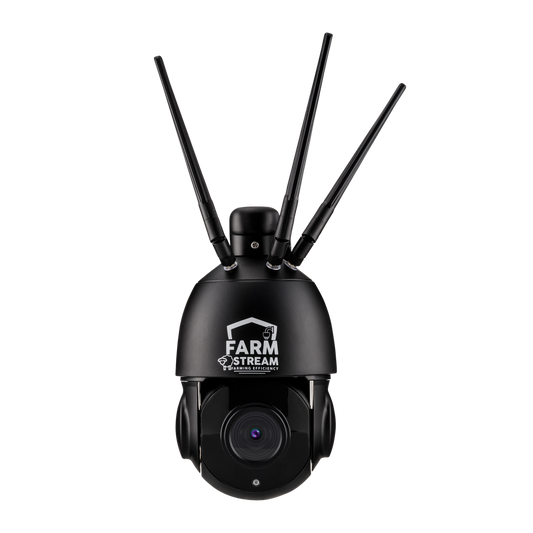
That's exactly why we built the Farmstream Solar 360 Mini — a solar-powered, 4G-connected security camera that needs no mains power and no WiFi, and keeps watching all winter. This guide covers both sides of park security: for park operators, how to cover a closed park without trenching cable, and for static caravan owners, how to keep an eye on your own van from home, all season long.
Why the Off-Season Is the Highest-Risk Window
A holiday park in July polices itself: hundreds of owners and guests, staff on site, lights on everywhere. A holiday park in January is the opposite — a quiet, unlit compound of high-value units with nobody around to hear a window go. That's why police forces in caravan country, like Lincolnshire, publish dedicated static caravan security advice aimed squarely at out-of-season crime.
The off-season threat has a few distinct shapes:
- Contents burglary: TVs, soundbars, white goods, tools, bikes, and anything else left in vans over winter. One quiet night and an unwatched avenue can mean a dozen vans hit in a single visit.
- Stripping for scrap: Copper pipework, boilers, and cabling ripped out of unoccupied statics — low-value scrap that causes thousands of pounds of damage per van.
- Gas bottle theft: Propane cylinders sitting in unlocked cages beside every van are a favourite easy grab, and a safety hazard on the way out.
- Damage on entry: Even failed break-ins are expensive — insurer claims data puts an attempted break-in at around £900 in repairs, and a forced patio door at £1,400+.
- Trespass, squatting and vandalism: An empty park with an open barrier attracts unwanted visitors of every kind — Compass specifically warns about unauthorised access on open parks.
Off-season CCTV gives you the three layers that matter: visible deterrence that pushes thieves towards an easier park, instant detection via motion alerts the moment someone walks a closed avenue at 2 am, and timestamped HD evidence of faces, vehicles, and number plates for the police and insurers.
⚠️ Common Mistake
Treating security as a summer job. Most parks put their effort into the open season, when the site is full of witnesses — then power down for the exact months the risk peaks. If your security plan switches off in November, it isn't protecting the thing that actually gets attacked: the empty park in January.
What Thieves Target in an Empty Static Caravan

Knowing what walks out of unoccupied statics tells you where the cameras need to point:
- Electronics: Wall-mounted TVs are the number-one target — visible through the window, easy to carry, easy to sell. Games consoles, soundbars, and speakers follow close behind.
- White goods and furniture: Fridges, microwaves, washer-dryers, and even sofas are stripped from vans — often loaded into a vehicle that drove calmly through an unwatched entrance.
- Copper and boilers: Scrap-motivated thieves cause the worst damage per pound gained, tearing out pipework and heating systems and leaving the van open to the weather afterwards.
- Gas bottles: Full propane cylinders resell easily and usually sit outside the van in a plastic locker or open cage.
- Outdoor items: Decking furniture, storage box contents, mobility scooters, and bikes.
The standard advice from Lincolnshire Police is to strip the van at the end of the season — they call emptying statics "the single most important factor in stopping out-of-season crime" — and to leave curtains and cupboard doors open so the van is visibly empty. That's excellent advice, and cameras are what make it work at park level: an emptied van stops the loss, but only surveillance stops the £900-a-door damage of thieves finding out the hard way.
🎓 Expert Advice
Follow the police playbook: empty the van, then show it's empty. Take the TV home, leave curtains and cupboards open, and put nothing of value in eyeline of a window. A thief at the glass is doing a cost-benefit calculation — a visibly empty van with a camera above it fails both halves of the test.
For Park Operators: Securing a Closed Park

If you run a park, the off-season is when your owners' trust is really tested. Every static on your site belongs to a customer who is trusting you with a £30,000–£100,000 asset while they're not there to watch it — and one bad winter of break-ins does more damage to renewals and word of mouth than any price rise.
It works the other way too: security sells pitches. Prospective owners (and their insurers) ask the same questions the police advice tells them to ask — is there a barrier, is there CCTV, does someone actually watch the park out of season? A park that can answer "24/7 CCTV with motion alerts, all year round" has a genuine edge over the park down the coast that goes dark in November.
The operator's off-season camera plan usually comes down to three or four positions:
- The entrance and barrier: Every van-load of stolen TVs leaves through it. Capture the vehicle, the plate, and the driver.
- The main avenues: A camera on a pole sweeping the caravan rows covers dozens of units at once — the 355° pan of a single Solar 360 Mini watches a surprising amount of park.
- The rear boundary: Thieves scout the quiet way in — the back fence by the dunes, the field gate, the footpath corner nobody watches.
- Compounds and stores: Workshop, gas store, and any owners' storage areas.
Because the cameras are solar-powered and 4G-connected, none of this needs the park's power or network to stay on — and you can redeploy cameras seasonally, moving one from the pool area to the back boundary the week the park closes.
💡 Top Tip
Make your off-season security part of the sales pitch. Put "monitored 24/7 through the closed season" in your owner welcome pack, your pitch listings, and the sign at the barrier — then show prospective owners the live app view on your phone. It reassures the customer, warns off the burglar, and helps your owners with their insurance, all with the same camera.
For Static Owners: Watching Your Van from Home
You don't have to be a park operator to put a camera on a static. If your park allows it (check with the office — most welcome anything that cuts winter crime), a single Solar 360 Mini on or beside your own van gives you what no park-wide system can: your pitch, on your phone, all winter.
- Instant motion alerts the moment anyone steps onto your pitch — whether that's a thief at the patio door or just the park's maintenance team checking the gas.
- Live HD view from anywhere: open the app from your sofa 200 miles away, pan around the pitch, and check the van after every storm as well as every alert.
- Two-way audio: challenge anyone on your decking through the camera's speaker. A voice from a "closed" caravan ends most visits instantly.
- Evidence that protects your claim: timestamped footage of exactly who did what, and when — invaluable when your insurer asks, and when the park reviews what happened.
Because the camera is fully self-contained, it doesn't matter that your van's electricity is off, the hook-up is isolated, and the park WiFi is down for winter. Mount it on the van end, a decking post, or a short pole by the pitch; the solar panel and built-in battery do the rest.
⚠️ Common Mistake
Buying a WiFi camera for a park that switches the WiFi off. Indoor smart cameras and doorbells sold for houses assume mains power and home broadband — a static caravan in the closed season has neither. If the box says "requires 2.4GHz WiFi", it will spend the winter as an ornament. For a seasonal pitch you need solar power and 4G, full stop.
Why the Solar 360 Mini Is Built for the Off-Season
The Farmstream Solar 360 Mini was designed for exactly these conditions: high-value assets, no mains power, no broadband, and months between visits. At just £199, it's a fully self-contained off-grid security camera that runs on solar and connects over 4G.
Why it suits holiday parks and static pitches:
- Completely off-grid: The included 26 W solar panel and built-in battery keep it running 24/7 — through the winter shutdown, when pitch hook-ups are isolated and the park is empty.
- No WiFi needed: The built-in eSIM auto-connects to the strongest 4G network in your area (EE, Vodafone, Three, or O2) — park WiFi can stay off all winter.
- 5MP HD video (2560 × 1920): Sharp enough to identify faces, vehicles, and number plates at the barrier.
- 355° pan and 90° tilt: One camera sweeps an entrance, an avenue of vans, or a whole pitch.
- Auto-tracking: Detects human movement and follows intruders between the vans automatically.
- 20–30 m infrared night vision: Clear footage on the long, dark nights when off-season break-ins happen.
- Two-way audio: Challenge intruders through the built-in speaker — from the park office, the farmhouse, or your living room at home.
- Smart push alerts: Phone notification the moment there's movement where there shouldn't be any.
- 64 GB on-board storage: Around 2–3 weeks of continuous 24/7 recording (upgradeable to 256 GB), with no data used for recording.
- IP66 weatherproof: Built for exposed coastal parks and everything a UK winter throws at them.
- Portable and relocatable: Move cameras between summer and winter positions in minutes — no rewiring.
For larger parks with long straight avenues or a big entrance to cover, pair the Solar 360 Mini with the Farmstream 360 (4K PTZ) for additional long-range coverage.
Solar Power: CCTV That Survives the Winter Shutdown

The defining fact of off-season park security is that the power goes off. Parks isolate pitch hook-ups for safety and cost; owners drain down and unplug. Any camera that needs a socket dies with the season — and running new armoured cable to a barrier or back fence costs more than the cameras it would feed.
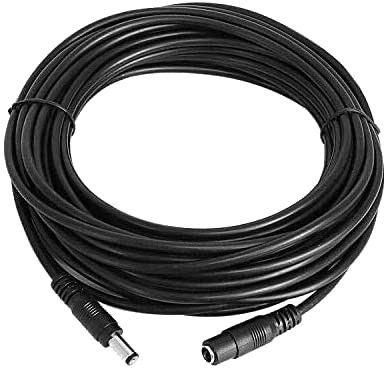
The Solar 360 Mini sidesteps all of it. It ships with a 26 W solar panel (400 mm × 350 mm) and a 2 m cable — mount the panel in an unshaded spot near the camera and you're done. The built-in battery carries the camera through the night and through overcast spells, and intelligent power management adjusts consumption for short winter days. It keeps working in December for the same reason it was easy to fit in October: it never needed the park's electricity in the first place.
💡 Top Tip
Statics are tall and the winter sun is low. Mount the solar panel high — above caravan-roof height, facing south — so a neighbouring van's shadow doesn't park itself over your panel from November to February. A spot that charges happily in July can sit in shade all winter if you don't check the low-sun angles.
4G Cameras for Parks Without (Winter) Internet
Plenty of parks have decent WiFi in August and none at all in January — routers off, office shut, season over. The Solar 360 Mini connects directly to the mobile network using its built-in eSIM, which auto-switches to the strongest available 4G signal in your area, whether that's EE, Vodafone, Three, or O2.
How 4G data works with a park camera:
- The camera records 24/7 to its internal 64 GB SD card — this uses zero 4G data.
- 4G data is only used when you view live or recorded footage through the CamHipro app.
- Push notifications (motion alerts) use negligible data.
Farmstream's 4G Streaming Plan costs just £89/year and includes 50 hours of live viewing — more than enough for a whole closed season of checks and alert reviews. Monthly and higher-usage plans are available, and the camera is fully unlocked if you'd rather use your own data SIM.
Solar Cameras vs Wired CCTV & Patrols: The Costs
Park operators pricing up off-season security usually compare three options: a professionally installed wired system, winter security patrols, or self-installed solar 4G cameras. Here's how they stack up:
| Solar 360 Mini | Installed Wired CCTV | Winter Patrols | |
|---|---|---|---|
| Upfront cost | £199 per camera (you own it) | Typically £1,000+ per camera position with trenching & cabling | None |
| Ongoing cost | £89/year (optional 4G plan) | Maintenance contracts, electricity | £1,000s per closed season |
| Works with pitch power isolated | Yes — solar + battery | Needs a live supply | Yes |
| Coverage | 24/7 recording + instant alerts | 24/7 | Minutes per night |
| Needs broadband | No — built-in 4G eSIM | Yes, for remote viewing | No |
| Repositionable between seasons | Yes — relocate in minutes | No — fixed positions | n/a |
| Cost to cover 3 key points | £597 one-off | £3,000+ | Recurring, every year |
Three Solar 360 Minis (£597 total) covering the entrance, the main avenues, and the rear boundary give a typical park 24/7 winter coverage with smart alerts and remote access — for less than the install cost of one wired camera position, and a fraction of a single season of patrols. Set against the £900 repair bill of one attempted break-in — let alone a stripped van — the system pays for itself the first time it's needed. For individual owners, one camera at £199 is less than most policy excesses.
Mounting Options: Entrances, Rows & Individual Pitches
The Solar 360 Mini ships with pole mount fixings, screws, and fittings, so installation is straightforward without specialist tools. The positions that earn their keep on a holiday park:
- The entrance and barrier: The single most valuable position. Everything stolen from a park leaves in a vehicle through the entrance — capture the plate and the driver on the way in, and most won't stay.
- A pole over the caravan avenues: A 3–4 m pole gives a panoramic view down the rows; the 355° pan covers dozens of vans from one position.
- The rear boundary: The back fence, the dune path, the field gate — thieves prefer the entrance nobody watches.
- Gas store and compounds: Cylinder cages and maintenance compounds are quick-grab targets.
- Individual pitches: For owners — the van end, a decking post, or a short pole covering the door, windows, and gas locker in one view.
Because the camera is completely self-contained, you can relocate it in minutes — unbolt, move, remount. Cover the pool and playground in summer, then shift cameras to the boundaries the week the park closes. The camera reconnects to 4G automatically.
Important: Mount the solar panel within 2 m of the camera (the cable cannot be extended) and make sure it sits in an unshaded, south-facing spot — above static-roof height wherever possible.
Setup in Under 10 Minutes
The Solar 360 Mini is a true plug-and-play park camera. No IT knowledge, no network configuration, no installer.
Four steps to a watched park (or pitch):
- Mount the camera where there's good 4G coverage — barrier post, pole, fence line, or van end.
- Mount the solar panel in an unshaded spot within 2 m of the camera.
- Download the free CamHipro app and scan the QR code on the camera.
- Start viewing, recording, and receiving alerts — you're live.
There's no limit on connected devices, so the park owner, the warden, and whoever's on call can all monitor the same cameras — and an owner's whole family can share the view of their pitch.
💡 Top Tip
Fit cameras before the park empties, not after the first break-in. The best week is the last week of the season: there's still help about, you can walk the site checking 4G signal at each position, and the cameras are already watching on the quiet Monday after the gates shut — which is exactly when the first scouting visit happens.
Case Study: A Coastal Holiday Park in the Closed Season
A family-run holiday park on the Lincolnshire coast — 85 statics, closed from November to March — had two winters of trouble: TVs taken from six vans one year, and a van stripped of copper the next. Wired CCTV quotes came in at over £4,000 because of trenching runs to the barrier and the back boundary, so instead the park installed four Solar 360 Mini cameras: one on the entrance barrier, two on poles covering the main avenues, and one on the rear fence line by the dunes.
In the first closed season, the avenue camera's motion alert flagged two figures between the vans at 11.40 pm on a Sunday in January. The owner challenged them through the camera's two-way audio while watching the live feed from the farmhouse; they left at a run, and footage of their vehicle at the barrier — captured by the entrance camera minutes earlier — went to the local rural crime team the next morning. It was the park's first winter in three years without a single forced door.
The cameras now feature in the park's owner welcome pack, and the office reports the question every prospective owner asks — "is the park watched in winter?" — has become the easiest one to answer.
Total cost for four Solar 360 Mini cameras: £796 — less than the repair bill from either of the previous winters, and a fraction of one van's contents.
Insurance, Legal Considerations & GDPR
Three things park operators and static owners should know:
1. Static caravan insurance has conditions — and the off-season is where they bite. Policies from specialist insurers like Lifesure and Compass typically include requirements around locks, unoccupancy periods, and winter precautions. Check your own policy wording carefully — and remember that visible security does two jobs: it deters the break-in that would trigger a claim, and timestamped HD footage strengthens the claim if the worst happens anyway.
2. Report thefts and suspicious activity to the police. Off-season park crime is often organised and repeated — the van that scouts your park will scout the next one too. Clear footage of people, vehicles, and number plates transforms a police report. Call 101, or 999 if a crime is in progress, and share footage with your local rural crime team. Forces in caravan areas, like Lincolnshire Police, actively publish advice and want to hear about park crime patterns.
3. Park CCTV must comply with UK GDPR. For operators recording areas where owners, guests, and staff pass:
- Signage: Display clear signs at the entrance and around the park stating CCTV is in operation — the sign itself is a deterrent, and owners expect it.
- Data control: Store recordings securely and limit access to authorised staff.
- Privacy zones: Point cameras at entrances, avenues, and boundaries rather than into the windows of occupied vans, neighbouring properties, or public roads where possible. Individual owners should frame their camera on their own pitch.
The Solar 360 Mini stores all footage locally on its on-board SD card, and remote viewing through the CamHipro app uses a secure encrypted connection — helping parks stay GDPR-compliant while protecting their owners' vans.
🎓 Expert Advice
Operators: write your off-season security into your park rules and your owners' handbook — what's covered by cameras, when the barrier drops, and your recommendation that owners empty vans and leave curtains open. It aligns every owner with the police advice, sets expectations for insurers, and turns your winter security from a cost into a documented selling point for every pitch you market.
FAQs
How much does CCTV for a holiday caravan park cost?
The Solar 360 Mini is a one-off purchase of £199 per camera. The optional 4G streaming plan is £89/year (50 hours of live viewing). Recording 24/7 to the SD card uses no data at all, and the camera is fully unlocked if you'd prefer your own SIM. Three cameras covering a typical park's entrance, avenues, and rear boundary cost £597 one-off.
Why are static caravans broken into during the off-season?
Because from November to March nobody's there. Offices go part-time, pitches empty out, and rows of unoccupied vans full of TVs, white goods, copper, and gas bottles stand dark for months. Insurers describe statics as easier targets than houses because of lighter doors and windows — and an empty park gives thieves time to work unseen.
Will a camera work when the park's power is switched off for winter?
A plug-in camera won't — and many parks isolate pitch hook-ups for the closed season. The Solar 360 Mini runs entirely on solar with a built-in battery and connects over 4G, so it keeps recording and alerting all winter with no mains and no WiFi.
Can I check on my static caravan from home over winter?
Yes. With a Solar 360 Mini on your pitch you get a live HD view, remote pan and tilt, and instant motion alerts on your phone from anywhere via the free CamHipro app — plus two-way audio to challenge anyone on your decking.
Can solar-powered cameras run through a UK winter?
Yes. The 26 W solar panel is designed for UK light conditions, the built-in battery covers nights and overcast spells, and the camera automatically manages its power for short winter days. Just mount the panel above static-roof height, facing south, out of low-sun shadows.
Do I need the park's WiFi?
No. The built-in eSIM auto-selects the strongest 4G network in your area (EE, Vodafone, Three, or O2). Park WiFi is usually off out of season anyway — a 4G camera doesn't need it.
How much footage does the camera store?
The included 64 GB SD card holds approximately 2–3 weeks of continuous 24/7 recording, upgradeable to 256 GB. Once full, the oldest footage is automatically overwritten.
Can park staff and owners share the same cameras?
There's no limit on devices per camera, so a park's cameras can be monitored by the owner, warden, and on-call staff together. Individual owners' cameras are separate — each owner monitors their own pitch camera with their own login.
Do I need my park's permission to fit a camera on my static?
Check with the park office first — camera policies vary between parks, and most will want cameras framed on your own pitch rather than neighbouring vans. In practice many parks welcome owner cameras: every watched pitch makes the whole park a harder target.
How do I stop the camera itself being stolen?
Mount cameras out of easy reach (3–4 m high) and use the included pole mount fixings with anti-tamper bolts. On parks with multiple cameras, position them to cover each other's approaches — anyone reaching for one camera is already recorded by another, and the footage is saved on board.
Don't Let Your Park Go Dark This Winter — From £199
The Solar 360 Mini gives holiday parks and static caravan owners 5MP HD security with pan, tilt, auto-tracking, and two-way audio — powered entirely by solar and connected via 4G. No mains power, no WiFi, no installer: it keeps watching through the exact months your park is empty and your vans are most at risk. At £199 — less than the repair bill from a single attempted break-in — it protects the vans your park is built on, and answers the first question every owner asks: "who's watching in winter?"

Free UK shipping · Same-day dispatch before 2 pm (Mon–Fri) · 30-day money-back guarantee · UK-based phone support