
Shoot & Estate Security: Cameras Against Poaching and Hare Coursing
Every keeper knows the signs: a strange 4x4 idling on the estate road at dusk, lamps sweeping a field at 2 am, dog boxes in the back of a vehicle that has no business being on the stubble.
And every keeper knows the dilemma that follows — because the traditional response, walking out into the dark to move them on, is exactly what the police and BASC now warn against. Poachers are rarely just poachers: as Hampshire's Country Watch Rural Crime Task Force puts it, "those who poach are often linked to wider crime networks involved in theft, burglary, criminal damage, violence and anti-social behaviour" — and farmers and gamekeepers who intervene face intimidation and threats of violence. BASC's advice is to gather evidence and report — vehicles, numbers, descriptions — not to confront.
Which is precisely what a camera does. A solar-powered 4G camera on the release pen, the estate gateway, or the stubble field entrance watches all night, every night, records everything, and puts the evidence on your phone — without anyone standing in a dark field opposite men with dogs.
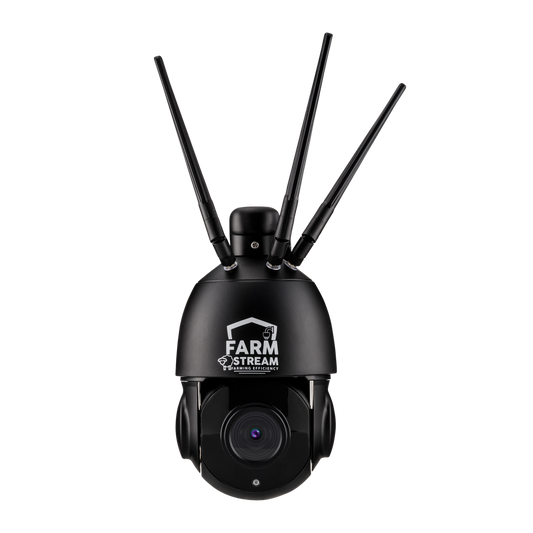
The problem is that the places that need watching are the definition of off-grid: release pens deep in woodland, gateways a mile from the nearest building, outlying blocks with no power and no broadband. That's exactly why we built the Farmstream Solar 360 Mini — a solar-powered, 4G-connected estate security camera that works anywhere with a mobile signal.
Published in August for a reason: the poults are in the pens, the grouse season opens on the 12th, and the moment the harvest comes off, the coursers arrive on the stubble. This guide covers the shape of the problem, the law that finally has teeth, and where to put cameras before the season starts.
Poaching & Hare Coursing: The Shape of the Problem

Poaching sounds almost quaint — one for the pot. The reality on a modern shoot is organised, mobile, and frequently violent. BASC describes serious loss of income from the illegal taking of game and fish, damage to crops and land, and — the crucial point — poachers who are typically involved in multiple criminal activities, from dog and livestock theft to burglary. The vehicle on your estate road at midnight is very often scouting more than pheasants.
The scale is real and it tracks the season:
- 55 reports of game bird poaching were recorded by Hampshire Police alone between September 2024 and February 2025 — one county, one season. Alongside poaching, the force warns shoots to expect burglary and theft, criminal damage, and violence and intimidation against landowners and gamekeepers.
- Hare coursing arrives with the stubble. The moment the harvest comes off, flat open fields give coursers the running they want — 4x4s through gateways and crops, dogs slipped on hares, and increasingly the whole thing filmed and gambled on. It's why forces issue their warnings in August, at the start of the game bird shooting season.
- Enforcement works when evidence exists. Lincolnshire Police's Operation Galileo — the national blueprint for anti-coursing work — saw 186 people dealt with in the courts in a single year. And when three men were reported poaching pheasants on farmland near Lewes in September 2025, Sussex Police's Rural Crime Team pursued them on foot with the help of local gamekeepers and detained all three — then appealed to the public for exactly one thing: CCTV and mobile footage.
That last detail is the whole story. Police can and do act on rural crime — but a report of "a dark-coloured 4x4, two men, some dogs" goes in a drawer. A registration, a face, and a timestamped clip of dogs being slipped on your stubble is a case.
An estate camera earns its keep four ways:
- Deterrence: Poachers and coursers choose ground they believe is unwatched. A visible camera high on the gateway, with signage, sends them somewhere else — the cheapest win in rural security.
- Early warning: Motion alerts the moment a vehicle enters the estate road or a person approaches the pen — so the keeper knows what's happening from the Land Rover, the house, or bed, not from twenty yards away in the dark.
- Evidence: Timestamped HD footage of vehicles, plates, dogs, and faces — the difference between an incident number and a conviction.
- Reassurance: A sweep of the pens at 11 pm from your phone: poults settled, feeders upright, nothing moving on the ride. Keepering is a seven-day job; the camera takes the nights.
Top Tip
Log every suspicious vehicle — registration, date, time, direction of travel — even when nothing happens. Scouting visits come days before the real one, and a pattern of sightings from your cameras is exactly the intelligence rural crime teams act on. A note in your phone tied to a saved clip takes thirty seconds.
But release pens and stubble gateways have no power and no broadband — which is why traditional CCTV has never worked on shoots. Solar-powered 4G cameras change that completely.
Why Evidence Beats Confrontation
It needs saying plainly, because keeping attracts people who run towards problems: the official advice from both police and BASC is do not confront poachers or hare coursers.
BASC South East director Michelle Nudds put it directly in Hampshire Police's season warning: "Farmers or gamekeepers who intervene in poaching or hare coursing may face intimidation through threats of violence." These are not romantic one-for-the-pot characters; they are, in the police's words, linked to organised networks involved in theft, burglary, criminal damage and violence. A keeper alone at 2 am, a mile from help, is not a fair contest — and no bag of pheasants is worth it.
What the police actually ask for instead, per BASC's guidance and Hampshire's advice:
- Call 999 if a crime is in progress or you feel threatened; 101 for everything else.
- Give detail: vehicles used, how many offenders, whether they have firearms.
- Insist on an incident/log number, state that it's wildlife crime, and ask for the report to go to the Wildlife Crime Officer and local beat officer — this is what gets rural incidents properly recorded and resourced.
- Watch for the tells: high-powered lamps sweeping fields after dark, catapults, unfamiliar vehicles parked on farmland or idling at gateways.
- Report anonymously if needed via Crimestoppers on 0800 555 111.
Expert Advice
Say the words "wildlife crime" when you call it in. BASC's guidance is specific: insist on the incident or log number, state that you're reporting a wildlife crime, and ask for the report to be forwarded to the force's Wildlife Crime Officer and your local beat officer. Reports logged this way are counted, resourced, and followed up — reports logged as generic suspicious activity often aren't.
Every item on that list is something a camera does better than a person in the dark. It sees the vehicle arrive, records the registration, counts the offenders, captures the lamps and the dogs — and it cannot be threatened, followed home, or put in hospital. The keeper's job becomes making the call with the evidence already on his phone.
The Law: Unlimited Fines, Prison & Seized Dogs
For most of two centuries, the law against poaching was the Game Act 1831 and the Night Poaching Act 1828 — with penalties that stopped frightening anyone around the time of the horse and cart. That changed on 1 August 2022, when new provisions under the Police, Crime, Sentencing and Courts Act 2022 came into force specifically to crack down on hare coursing:
- Two new criminal offences: trespassing with the intention of using a dog to search for or pursue a hare, and being equipped to do so — meaning coursers can be charged on the way in, dogs and lamps in the vehicle, before a hare is ever slipped.
- Unlimited fines and up to six months in prison for both new offences — and the same increased penalties now apply to the old Game Act 1831 and Night Poaching Act 1828 offences.
- Dogs seized — and the bill sent to the owner: courts can order convicted coursers to reimburse the police's kennelling costs for seized dogs, which for a months-long case can dwarf the fine itself.
- Disqualification from owning or keeping dogs on conviction — for organised coursers, losing the dogs is the penalty that actually hurts.
As the CLA's vice president summarised when the law took effect: "anyone caught hare coursing will now face an unlimited fine and up to six months in prison."
The operative word is caught. Every one of those powers runs on evidence: proving trespass, proving intent, tying a vehicle and its occupants to a field at a time. "Being equipped" is a powerful charge precisely because a camera at the gateway captures the equipment — the dogs, the lamps, the 4x4 — timestamped, on your land, at 3 am. The 2022 Act effectively made gateway footage the most valuable evidence in rural policing.
Game bird poaching remains squarely criminal too — as Sussex Police's Inspector Andrew Barker noted after the Lewes arrests, "It is illegal to hunt game birds on private land, outside of their open season and without a firearms license."
Why the Solar 360 Mini Is Ideal for Shoots & Estates
The Farmstream Solar 360 Mini was designed for exactly these conditions. At £199 — less than a single gun pays for a driven day — it's a fully self-contained off-grid security camera that runs entirely on solar power and connects via 4G. No wiring, no broadband, no electrician trenching cable through the covert.
Here's why keepers and estate managers are choosing it:
- Completely off-grid: The included 26 W solar panel and built-in battery keep the camera running 24/7 — through the shortest days of the season, when the pens are fullest and the nights are longest.
- No WiFi needed: The built-in eSIM auto-connects to the strongest 4G network in your area (EE, Vodafone, Three, or O2) — so the far block gets the same coverage as the yard.
- 3MP HD video (2560 × 1920): Sharp enough to identify faces, dogs, vehicle details, and — crucially — number plates at the gateway.
- 355° pan and 90° tilt: Sweep the whole pen, ride, or field from a single position — gateway, boundary, and approach in one camera.
- Auto-tracking: Detects movement and automatically follows a person — or a vehicle working along a hedge line — through the frame.
- 20–30 m infrared night vision: Clear footage in total darkness, which is when nearly all of it happens — lamping, netting pens, coursing at first light.
- Two-way audio: A voice from a camera announcing the police have been called moves a vehicle on faster than a keeper ever could — with the keeper safely elsewhere.
- Smart push alerts: Notified the moment a person or vehicle enters the frame — the difference between watching them arrive and finding the wire cut in the morning.
- 64 GB on-board storage: Approximately 2–3 weeks of continuous 24/7 footage (upgradeable to 256 GB).
- IP66 weatherproof: Built for exposed gateways, wet woods, and everything a season throws at a pen.
- Portable and relocatable: Pens in summer, stubble gateways after harvest, feed rides in the season, the lake in the spring — the camera moves with the calendar in minutes.
For parkland, long drives, and big open stubble, pair the Solar 360 Mini with the Farmstream 360 (4K PTZ) for additional long-range coverage of approaches and boundaries.
Key Features to Look For in an Estate Security Camera
An estate is not a driveway. The ground is big, the targets are spread out, and the people you're recording arrive at night and don't want to be seen. Here's what matters — and how the Solar 360 Mini delivers:
- Number plate capture: Poachers and coursers arrive by vehicle, and the plate is the case. 5MP resolution resolves plates at gateway distances; infrared keeps them readable at night.
- No power dependency: Solar with built-in battery means no generator by the pen and no cable through the wood. The 26 W panel is designed for UK light conditions.
- No WiFi dependency: 4G with an auto-switching eSIM deploys anywhere on the estate with mobile signal — including blocks miles from the office.
- Instant motion alerts: A coursing run is over in minutes. An alert as the 4x4 turns in means the 999 call happens while they're still on the field — with a live description from the feed.
- 24/7 recording: Continuous recording to the SD card means every vehicle, every lamp, and every visit is captured even when nobody's watching the app.
- Night vision that identifies: 20–30 m infrared that resolves faces and plates — not a grey smudge with headlights in it.
- Remote pan, tilt, and zoom: Check the pens, the gateway, and the ride from your phone between rounds — and zoom in on anything that shouldn't be there.
- Two-way audio: Challenge from a distance. A camera that speaks ends most visits without anyone meeting anyone.
- Multi-user access: Keeper, underkeeper, estate manager, and the farm team can all receive alerts — no limit on connected devices, so whoever's nearest responds (with a phone call, not a confrontation).
Common Mistake
Buying a camera that only records when it detects motion. Motion detection can miss a vehicle that never leaves the lane, or a figure working slowly along a hedge line at the edge of range. Continuous 24/7 recording to the SD card — with motion alerts layered on top — means the footage exists even when the alert doesn't fire. When police ask "do you have anything from between 2 and 4 am?", the answer should always be yes.
Solar-Powered CCTV: No Mains Power in the Woods? No Problem

Release pens live in woods. Stubble gateways live a mile up a track. Neither has a plug socket within half a mile, and running armoured cable to either is money no shoot budget will ever approve.
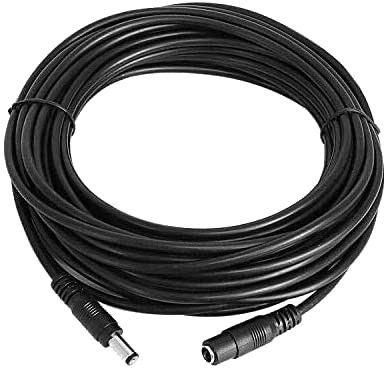
The Solar 360 Mini solves this entirely. It ships with a 26 W solar panel (400 mm × 350 mm) and a 2 m cable — mount the panel in an unshaded spot near the camera and you're done. The built-in battery carries the camera through the night and overcast spells.
One estate-specific note: woodland shade is the thing to plan around. Mount the panel on the ride edge, in the pen clearing, or above the canopy line rather than under the trees — anywhere it catches open sky within 2 m of the camera. Intelligent power management then keeps the camera running year-round, including the deep-winter weeks when the season is in full swing and daylight is at its shortest.
Common Mistake
Mounting the solar panel under the canopy in August. A panel that charges happily in full summer leaf will starve in December, when the sun is low and the season is at its busiest. Site the panel for the worst light of the year, not the best: the pen clearing or the southern ride edge, angled at the winter sun — and check the battery level in the app after the first overcast week.
That makes solar CCTV viable in the exact places estates have never been able to watch: pens, feed rides, outlying gateways, lake banks, and boundaries — anywhere a poacher currently assumes nobody can see.
4G Cameras for Land Without Internet
There's no broadband in a covert. The Solar 360 Mini connects directly to the mobile network using its built-in eSIM, which auto-switches to the strongest available 4G signal in your area — EE, Vodafone, Three, or O2.
How 4G data works with estate cameras:
- The camera records 24/7 to its internal 64 GB SD card — this uses zero 4G data.
- 4G data is only consumed when you view live or recorded footage through the CamHipro app.
- Push notifications (motion alerts) use negligible data.
Farmstream's 4G Streaming Plan costs £89/year and includes 50 hours of live viewing — plenty for daily checks and incident review. Monthly and higher-usage plans are also available, and the camera is fully unlocked if you'd rather run your own data SIM.
What Cameras Cost vs What a Season of Incidents Costs
Estates that price up security usually get quotes for wired CCTV around the house and yard — which protects the silver and leaves the shoot, the pens, and ten gateways wide open. Here's how the approaches compare:
| Solar 360 Mini | Installed Wired CCTV | |
|---|---|---|
| Upfront cost | £199 per position (you own it) | Installation, trenching & cabling (typically £1,000+ per camera position) |
| Ongoing cost | £89/year (optional 4G plan) | Maintenance contracts, electricity |
| Reaches the pens & far gateways | Yes — anywhere with 4G signal | No — limited to power & cable runs near buildings |
| Needs broadband | No — built-in 4G eSIM | Yes, for remote viewing |
| Moves with the season | Yes — pens, stubble, rides, lake, in minutes | No — fixed positions |
| Remote access via app | Yes — free CamHipro app, unlimited users | Sometimes (extra cost) |
| Self-install | Yes — under 10 minutes | No — engineer visit required |
Now set it against the other side of the ledger. A raided release pen can undo a summer's rearing in one night; a coursing visit leaves flattened crops, smashed gates, and — because coursers come back to ground that works — a standing invitation for the next one. Add what the police warn travels with poaching — burglary, theft, and criminal damage — and the exposure runs across the whole estate, not just the game cart. Covering the main pen, the estate road gateway, and the worst stubble entrance is £597, once. Most shoots spend more than that on feed in a fortnight.
Where to Mount: Release Pens, Gateways & Stubble Fields

The Solar 360 Mini ships with pole mount fixings, screws, and fittings, so installation anywhere on the estate is straightforward. Think like the visitor: they come by vehicle, they use gateways, and they prefer ground they've scouted. Priority positions for shoots and estates:
- Release pens: The single most valuable position from July to October. A camera on a pole overlooking the pen catches anyone approaching the wire — and doubles as a daily welfare check on the poults, feeders, and pop-holes without an extra trip.
- The main estate road gateway: Every vehicle in and out, with plates. Most incidents start with a vehicle that has no reason to be there — this is where you record it.
- Stubble field entrances: The coursers' way in. Cover the gateways onto your flattest, openest fields from August onwards — combined with physical blocking (locked gates, bunds), a watched gateway sends them to easier ground.
- Feed rides and hoppers: Poachers follow the birds, and the birds follow the feed. A camera on the main ride catches lamping and netting where the birds roost and feed.
- Known lamping fields and boundaries: If a field gets lamped every season, put a camera on it before this season. Watch for the tells Hampshire Police flag — high-powered lights after dark and catapults.
- The keeper's yard and kennels: Dog theft rides along with rural crime — the same camera logic protects the working dogs, the quad, and the feed store.
Mount it high. A camera at head height invites tampering; a camera at the top of a 3 m pole — out of arm's reach — is visible enough to deter, safe from interference, and still close enough to read a plate. Use the included anti-tamper bolts, and angle the camera to cover its own approach so anyone coming for it is recorded first. By then the footage is on board and the alert is on your phone.
Top Tip
Run a plate test before the season starts. Once the camera is up, park your own 4x4 in the gateway — day and night — and check in the app that the registration is clearly readable at the angle and distance you've chosen. Five minutes of testing in August is the difference between evidence and a blurry shape in November. Adjust the tilt or move the camera a few metres until the plate reads clean in infrared.
Because it's fully self-contained, the camera relocates in minutes and follows the shoot calendar: pens through the summer, stubble gateways after harvest, feed rides through the season, the lake or the lambing field in spring. No rewiring — it reconnects to 4G automatically.
Important: Mount the solar panel within 2 m of the camera (the cable cannot be extended) and in an unshaded spot — on woodland positions, use the ride edge or clearing rather than under the canopy.
Setup in Under 10 Minutes
The Solar 360 Mini is a true plug-and-play estate camera. No IT knowledge, no network configuration, no installer on the estate.
Four steps to get the ground watched:
- Mount the camera where there's good 4G coverage — the pen, the gateway, or the stubble entrance.
- Mount the solar panel in an unshaded spot within 2 m of the camera.
- Download the free CamHipro app and scan the QR code on the camera.
- Start viewing, recording, and receiving alerts — you're live.
Multiple devices connect to the same camera, so the keeper, the estate office, and the farm team all get alerts on their own phones — there's no limit on users per camera.
Case Study: Coursers on the Stubble, Caught at the Gateway
A mixed arable and shooting estate in the East Midlands had the same problem every autumn: within a fortnight of the combine finishing, 4x4s were on the stubble at dawn — dogs slipped on hares, wheat ground rutted, and one year a gate chained shut was simply pulled off its hinges. The keeper had twice gone out to move them on and twice been threatened; after the second time, the estate manager called a halt to confrontations altogether.
Before the next harvest, the estate mounted three Solar 360 Mini cameras: one on the main estate road gateway, one on the worst stubble field entrance, and one overlooking the release pen — with CCTV signage at each. Physical measures went in alongside: locked gates and a bund on the field entrance the coursers favoured.
The first visit of the season triggered a motion alert at 5:40 am — a 4x4 pausing at the blocked gateway, two men, dog boxes visible. The keeper watched from his kitchen, called 101 with a live description and the registration off the recorded footage, insisted on an incident number, and asked for it to be logged as wildlife crime. The vehicle moved off without ever getting onto the field. The clips — timestamped, plate readable in the infrared — went to the force's rural crime team the same morning, where they matched a vehicle already of interest. Under the 2022 coursing laws, being equipped to trespass with dogs to pursue hares is an offence on its own, and the estate's footage now forms part of an active file.
The estate hasn't had a courser on the stubble since — and the keeper hasn't stood in a dark field opposite anyone.
Total cost for three cameras: £597. Less than the price of repairing one pulled-off gate and a season of rutted wheat — and every camera moves to the pens next summer.
Reporting: How to Make the Footage Count
Footage only becomes a prosecution if it reaches the right people, the right way. The process, drawn from BASC's poaching guidance:
- In progress or threatened: 999. Give the vehicle description, registration, number of offenders, and whether firearms are involved — all readable from your live feed, from safety.
- Otherwise: 101 or your force's online reporting tool. Insist on the incident/log number, state clearly that it's wildlife crime, and ask for the report to be passed to the Wildlife Crime Officer and the local beat officer.
- Export clips promptly — the SD card overwrites oldest footage first. Save the vehicle, the plate, the people, and the dogs, and keep the originals with timestamps intact.
- Log the pattern. Repeat vehicles, dates, and times build the intelligence picture forces rely on — it's how Project Poacher lifted wildlife crime intelligence from 44% to 55% of the national total in its first six months. Your gateway camera is part of that picture.
- Anonymous route: Crimestoppers on 0800 555 111 — useful when information comes via beaters, neighbours, or the village.
Common Mistake
Leaving incident footage on the SD card. The card overwrites its oldest recordings once full — roughly every 2–3 weeks on the standard 64 GB card. If you wait until the police follow up a month later, the clip may be gone. Export the footage the same day, keep the original files with timestamps intact, and send copies — never your only copy — to the investigating officer.
One more point on filming: cameras on your own land, covering your own pens, gateways, and fields, are well-established practice — comply with UK GDPR by displaying CCTV signage at access points, angling cameras to cover your ground rather than neighbouring property, storing footage securely, and limiting access to authorised people. The Solar 360 Mini stores footage locally on its SD card, and remote viewing through the CamHipro app uses a secure encrypted connection.
FAQs
Should a gamekeeper confront poachers or hare coursers?
No. Police and BASC advice is consistent: don't approach them. Poachers are frequently linked to wider criminal networks, and keepers who intervene face intimidation and threats of violence. Call 999 if a crime is in progress, 101 otherwise, and let the camera do the evidence-gathering.
What is the law on hare coursing in the UK?
Since 1 August 2022, trespassing with intent to use a dog to pursue a hare — or being equipped to do so — carries an unlimited fine and up to six months in prison. Courts can also disqualify offenders from keeping dogs and order them to repay police kennelling costs for seized dogs. Penalties under the Game Act 1831 and Night Poaching Act 1828 were raised at the same time.
How much does an estate security camera cost?
The Solar 360 Mini is a one-off purchase of £199 per camera. The optional 4G streaming plan is £89/year (50 hours of live viewing). Recording 24/7 to the SD card uses no data, and the camera is fully unlocked if you'd prefer your own SIM. Pen, gateway, and stubble entrance covered: under £600.
Do I need WiFi or mains power at the release pen?
No. The Solar 360 Mini runs entirely on its included 26 W solar panel and built-in battery, and connects directly to 4G via its built-in eSIM — which auto-selects the strongest network in your area. In woodland, mount the panel on the ride edge or clearing so it gets unshaded light.
Can camera footage be used as evidence against poachers?
Yes — police actively appeal for CCTV footage in poaching investigations, as Sussex Police did after detaining three suspected pheasant poachers near Lewes. Timestamped clips of vehicles, plates, dogs, and faces are what turn an incident number into a charge. Export promptly and keep originals with timestamps intact.
When do poaching and hare coursing peak?
From late summer through winter. Game bird poaching tracks the season — Hampshire Police logged 55 game bird poaching reports between September 2024 and February 2025 — and hare coursing starts the moment the harvest comes off and the stubble opens up. August, with poults in the pens and the combines rolling, is the month to get cameras up.
What should I watch for on the estate?
The tells police highlight: high-powered lamps sweeping fields after dark, people carrying catapults, and unfamiliar vehicles on farmland or idling at gateways — often scouting visits before the real one. Log registrations and report patterns on 101; it all feeds the intelligence picture.
Will a solar camera run through the shooting season?
Yes. The 26 W panel is designed for UK light conditions and the built-in battery covers nights and overcast spells, with the camera adjusting its power use through the shortest days — so it runs right through the October–February season when the ground needs watching most.
How much footage does the camera store?
The included 64 GB SD card holds approximately 2–3 weeks of continuous 24/7 recording (upgradeable to 256 GB). Oldest footage is overwritten first, so export incident clips promptly.
Can the keeper, the office, and the farm team all view it?
Yes. There's no limit on connected devices — everyone who needs alerts gets them on their own phone via the free CamHipro app, so whoever's nearest responds with a phone call rather than a confrontation.
Watch the Ground Without Standing On It — From £199
The Solar 360 Mini gives you 5MP HD estate security with pan, tilt, auto-tracking, night vision, and two-way audio — powered entirely by solar and connected via 4G. No WiFi, no mains power, no installer. Mount it on the pen, the gateway, and the stubble entrance before the season starts, and every vehicle, every lamp, and every visit is on record — with the keeper safely on the right end of a phone. At £199, it's the cheapest man on the beat you'll ever employ.

Free UK shipping · Same-day dispatch before 2 pm (Mon–Fri) · 30-day money-back guarantee · UK-based phone support