
Motorhome Stopovers & Pop-Up Campsites: Monitoring Guests on Your Land
Britain's motorhome boom has quietly created a new farm diversification: getting paid for the corner of a field, with almost no setup cost.
Three routes have opened it up. Brit Stops now has over 1,100 host locations — farm shops, pubs, vineyards, and breweries offering free overnight parking in exchange for guest spending. The clubs run more than 2,000 Certificated Locations — small five-van sites, mostly on farms, set up without planning permission and charging £20–£30 a night. And since July 2023, the 60-day rule has let any eligible field in England run a pop-up campsite of up to 50 pitches for 60 days a year under permitted development.
All three share the same practical problem: the guests are in a field, and you aren't. The stopover paddock is behind the pub. The CL is across the lane. The pop-up field is half a mile from the farmhouse. Vans arrive while you're serving customers, feeding stock, or asleep — and you're left wondering whether the 8 pm arrival is tonight's booking, an early tomorrow, or someone who never booked at all.
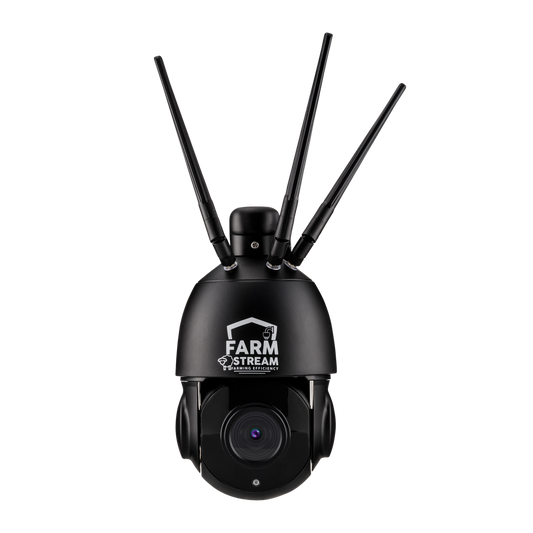
That's exactly the job the Farmstream Solar 360 Mini was built for — a solar-powered, 4G-connected campsite security camera that needs no mains power, no WiFi, and no installer. It verifies arrivals against your bookings, deters the small minority who don't pay, lets you handle late-night issues without walking down to a dark field — and turns "monitored site" into a safety selling point on your listing.
This guide is timed for late winter for a reason: February and March are when hosts set up new sites, renew listings, and notify councils ahead of Easter — the first big touring weekend of the year. Here's how to host well, and how to keep an eye on the field while you get on with everything else.
Three Ways to Earn From Overnight Guests

If you have a level, accessible corner of land, there are now three well-trodden routes to hosting paying overnight guests — each with a different balance of effort and income.
1. Brit Stops: free stays, paying customers. Brit Stops connects motorhomers with over 1,100 host locations across the UK — farm shops, pubs, vineyards, breweries, and attractions. Guests stay free for the night; in return, they're encouraged to buy a meal, a round, or a boot-load of produce. For a farm shop or rural pub, it's a customer acquisition scheme disguised as a car park: the motorhome parks in the paddock, and the till does the rest. Effort is minimal — a level spot and a welcome.
2. Certificated Locations: the five-van smallholder classic. A CL (or CS, in the Camping and Caravanning Club's scheme) is a small, members-only site certified through a club — allowed up to five caravans or motorhomes at a time, and exempt from the usual site licensing, which is why most CLs need no planning permission. There are over 2,000 CLs in the Caravan and Motorhome Club network alone. What you need, per The Van Club's setup guide: around half an acre of level ground, safe access, drinking water, chemical waste disposal, and pitch spacing that respects the 6-metre fire safety rule. Typical charges run £20–£30 per pitch per night — and you keep 100% of it.
3. The 60-day rule: a pop-up campsite in any eligible English field. Since 26 July 2023, permitted development rights have allowed temporary recreational campsites of up to 50 pitches for up to 60 days per calendar year — tents, motorhomes, and campervans (touring caravans are excluded). You notify your local planning authority each year with your dates and a site plan showing temporary toilets and waste disposal, and you're in business for Easter, half terms, and the summer holidays. The right doesn't apply on SSSIs, scheduled monuments, or within listed building curtilages, and sites in Flood Zones 2–3 need prior approval — Hipcamp's guide to the rules covers the details, including the 28-day rule that still applies in Wales, Scotland, and Northern Ireland.
Expert Advice: Under the 60-day rule you must be able to show you stayed within your notified dates. A camera at the gateway quietly solves this too — timestamped footage is a dated record of when the field was and wasn't in use, ready if the council ever asks.
The Host's Problem: You're Not on Site
None of these models comes with a warden. That's the point — low effort is what makes the income worthwhile — but it creates a set of niggles every host recognises within a season:
- Is that van booked? Arrivals turn up mid-afternoon, at dusk, and occasionally at 11 pm. Without eyes on the field, the only way to reconcile vans against bookings is to walk down and knock on doors — awkward for you, worse for guests.
- The non-payer. Most guests are scrupulous. But every stopover host has a story about the van that arrived late, left at dawn, and never appeared in the bookings — or the honesty box that came up light on a full weekend.
- Late-night issues. A generator running at midnight, a group arriving loudly at 1 am, headlights sweeping the field — small problems, but each one currently means getting dressed and walking down a dark track to deal with strangers on your own.
- The empty months. A stopover paddock or pop-up field sits idle much of the year — with your gates, troughs, tools, and sometimes machinery in it. An unwatched field with a well-signed entrance is an invitation outside the season too.
- Guest reassurance. It cuts both ways: guests — especially solo travellers — actively look for sites that feel safe. Their van is often worth £50,000 or more, and "is it a secure site?" is one of the most common questions hosts get asked.
Common Mistake: Running a stopover on an honesty box alone. It works — until the one busy bank holiday weekend when it doesn't, and you have no idea which of the nine vans that stayed didn't pay. A camera on the gateway doesn't replace trust; it just means you're not relying on it exclusively.
A campsite security camera earns its keep four ways:
- Verification: A vehicle alert the moment a van comes through the gate — check it against your bookings from the kitchen, the shop counter, or the tractor cab.
- Deterrence: A visible camera and signage at the entrance quietly removes the temptation to slip away unpaid — and protects the empty field off-season.
- Resolution: Two-way audio lets you greet a late arrival, direct them to a pitch, or politely resolve an unbooked van — without walking down to a dark field at midnight.
- Reassurance: "Entrance monitored by CCTV" on your listing is a safety feature guests actively choose — and a line that earns bookings from solo travellers.
The catch: a stopover paddock has no mains power and no broadband, and traditional wired CCTV needs both. That's where solar-powered 4G cameras come in.
Why the Solar 360 Mini Is Ideal for Stopovers & Campsites
The Farmstream Solar 360 Mini was designed for exactly these conditions. At just £199 — less than ten pitch-nights on a typical CL — it's a fully self-contained off-grid security camera that runs entirely on solar power and connects via 4G. No wiring, no broadband, and no electrician needed.
Here's why hosts are choosing it:
- Completely off-grid: The included 26 W solar panel and built-in battery keep the camera running 24/7 — through the season and through the empty winter months between.
- No WiFi needed: The built-in eSIM auto-connects to the strongest 4G network in your area (EE, Vodafone, Three, or O2).
- 5MP HD video (2560 × 1920): Sharp enough to identify a face, a van, and — in daylight — a number plate at the gateway.
- 355° pan and 90° tilt: Cover the gateway, the track, and the pitch field from a single camera position — and pan across the site remotely for a morning check.
- Smart person & vehicle alerts: Alerts on people and vehicles — not movement in general — so sheep in the next field and washing on guests' awnings won't fill your phone with notifications.
- Two-way audio: Welcome a late arrival, point them to a pitch, or deal with a midnight generator — from your phone, in bed.
- Auto-tracking: Detects human movement and automatically follows it across the field — useful off-season when nobody should be there at all.
- 20–30 m infrared night vision: Clear footage of late arrivals and early departures — the two moments hosts most need on record.
- 64 GB on-board storage: Records approximately 2–3 weeks of continuous 24/7 footage (upgradeable to 256 GB) — no cloud subscription required.
- IP66 weatherproof: Built for exposed field entrances, driving rain, and everything a UK season throws at it.
- Portable and relocatable: A pop-up field only operates 60 days a year — unbolt the camera and it moves to the yard, the fuel tank, or the barn for the other 305.
For larger sites — a 50-pitch pop-up field, or a long access track — pair the Solar 360 Mini with the Farmstream 360 (4K PTZ) for long-range coverage of the whole field from one position.
Key Features to Look For in a Campsite Security Camera
Not every security camera suits a working campsite. Here's what matters most — and how the Solar 360 Mini delivers:
- No power dependency: Solar with built-in battery means no cables trenched across a field guests walk through. The 26 W panel is designed specifically for UK light conditions.
- No WiFi dependency: 4G connectivity with an auto-switching eSIM means the camera works in the far paddock, not just within range of the farmhouse router.
- Vehicle detection: On a campsite, arrivals are the event that matters. A camera that alerts specifically on vehicles turns the gateway into a self-reporting arrivals log.
- Person detection with sensible zones: Guests will walk past the camera all day — set detection zones so alerts fire for the gateway and the off-limits areas, not every trip to the water tap.
- Two-way audio: The single most useful feature for a remote host. Most late-night issues end with a friendly voice from the gatepost — no torch-lit walk required.
- 24/7 recording: Continuous recording to the on-board SD card means arrivals and departures are captured even when no alert fires — the record you need if a payment dispute surfaces days later.
- Number plate capture: Every guest arrives in a vehicle, and most arrive in daylight — when 5MP resolution resolves plates clearly at the gateway. After dark, plates reflect infrared and can't be relied on, so the night record is the vehicle itself: make, colour, markings, and exact arrival and departure times — usually paired with a daylight pass of the same van.
- Remote pan, tilt, and zoom: A morning sweep of the field from your phone — pitches tidy, gate shut, fire spacing respected — without leaving the kitchen.
- Multi-user access: Share access with a partner or whoever covers the site when you're away — whoever's nearest can respond to an alert.
Top Tip: Use the remote pan for a ten-second morning check of pitch spacing. The 6-metre fire safety gap between units is one of the conditions clubs actually inspect CLs on — and it's the first thing to slip when guests self-pitch on a busy weekend.
Solar-Powered CCTV: No Hook-Up in the Field? No Problem
Stopover paddocks and pop-up fields don't have plug sockets. Many deliberately offer no electric hook-up at all — that's what keeps setup costs near zero — and no host wants to trench an armoured cable across a field for a camera.
The Solar 360 Mini solves this entirely. It ships with a 26 W solar panel (400 mm × 350 mm) and a 2 m cable, so you simply mount the panel in an unshaded spot near the camera and you're done. The built-in battery stores enough energy to keep the camera running through the night and on cloudy days.
Thanks to intelligent power management and energy-efficient standby modes, the camera remains operational year-round — including through winter, when the field is empty, the gate is signed, and an unwatched entrance is at its most tempting. Your season may be 60 days; the camera's is 365.
4G Cameras for Fields Without Internet
There's no broadband in the far paddock. The Solar 360 Mini connects directly to the mobile network using its built-in eSIM, which auto-switches to the strongest available 4G signal in your area — whether that's EE, Vodafone, Three, or O2.
How 4G data works with campsite cameras:
- The camera records 24/7 to its internal 64 GB SD card — this uses zero 4G data.
- 4G data is only consumed when you view live or recorded footage through the CamHipro app.
- Push notifications (arrival alerts) use negligible data.
Farmstream's 4G Streaming Plan costs just £89/year and includes 50 hours of live viewing — more than enough for checking arrivals against bookings and a daily look at the field. Monthly and higher-usage plans are also available.
The camera is also fully unlocked, so you're free to use your own data SIM if you prefer.
What a Camera Costs vs What a Season Earns
Put the numbers side by side. Illustrative figures for a typical hosting setup:
| What's at stake | Typical value |
|---|---|
| Five-van CL at £20–£30/night, steady season bookings | £8,000–£12,000/year |
| 60-day pop-up field, 20 pitches over peak weekends & holidays | £6,000+/season |
| One unpaid pitch-night per week across a 30-week season | £600–£900 lost |
| A poor review from a guest who felt unsafe or unwelcomed | Bookings, indefinitely |
| Solar 360 Mini watching the gateway | £199, once |
Compare the alternatives: installed wired CCTV typically starts at £1,000+ per camera position and needs mains power and broadband the field doesn't have; subscription WiFi cameras can't connect at all. The Solar 360 Mini is £199 outright — recording to the SD card is free forever, and the optional £89/year 4G plan only applies if you want remote live viewing. It pays for itself the first time it catches — or simply prevents — a handful of unpaid nights.
CCTV, Paying Guests & GDPR: Doing It Right
Campsite CCTV has one wrinkle the sheep field doesn't: your subjects are paying customers. Done right, it reassures them; done wrong, it's the thing the one-star review is about. The rules are simple:
- Watch infrastructure, not people. Point the camera at the gateway, the access track, and the facilities point — never into pitches, awnings, or van windows. You're monitoring arrivals and assets, not guests' evenings.
- Sign it clearly. Display CCTV signage at the entrance stating that the site entrance is monitored and who operates the system. Signage is half the deterrent anyway — and it converts the camera from surveillance into a published safety feature.
- Register with the ICO. Because you're recording on a commercial basis, UK GDPR applies: register with the Information Commissioner's Office and pay the small annual data protection fee, keep footage only as long as you need it (the SD card's rolling overwrite handles this naturally), and be prepared to respond if someone asks for footage of themselves.
- Say it on your listing. "Entrance monitored by CCTV" belongs in your site description, not the small print. For solo travellers and anyone in a £50,000+ van, it's a reason to choose your field over the next one.
Common Mistake: Aiming the camera across the pitch field to "see everything". Guests notice, reviews mention it, and you gain nothing — every van that stays came through the gate, so the gateway already sees everyone once, which is all verification needs.
Where to Mount: Gateway, Pitch Field & Facilities

The Solar 360 Mini ships with pole mount fixings, screws, and fittings — so installation is straightforward without specialist tools. Common mounting positions for hosts:
- The gateway (start here): Every guest, every visitor, and every would-be non-payer passes through it. A camera on a 3 m pole at the entrance records every arrival and departure — with a readable number plate on daytime movements, and the van's make, colour, and exact timings after dark. Its visible presence does the deterrent work before anyone parks.
- The access track: On sites where the gate is far from the pitches, a camera partway along the track confirms vans actually reached the field — and covers the route a late-night wanderer would take.
- The facilities point: Water taps, chemical disposal, waste bins — the shared infrastructure that occasionally gets misused, blocked, or damaged. A camera here also covers the area guests visit most, which is reassuring rather than intrusive.
- The Brit Stops paddock: For a farm shop or pub host, one camera covering the parking area and its entrance handles both jobs: overnight guests by night, the business's own yard security by day.
Mount it high. A camera at head height invites tampering; at the top of a 3 m pole — out of arm's reach — it's visible enough to deter, safe from interference, and still close enough to identify a face and a plate. Use the included anti-tamper bolts, and angle the camera to cover its own approach.
Top Tip: Mount the solar panel within 2 m of the camera (the cable can't be extended) in a spot that stays unshaded in high summer — the season when the field is fullest is also when hedgerow canopy is at its thickest.
Setup in Under 10 Minutes
The Solar 360 Mini is a true plug-and-play campsite camera. No IT knowledge, no network configuration, and no specialist installer required — it can be watching the gateway the same afternoon it arrives.
Four steps to get your field watched:
- Mount the camera where there's good 4G coverage — on a pole at the gateway, or covering the track and facilities.
- Mount the solar panel in an unshaded spot within 2 m of the camera.
- Download the free CamHipro app on your phone and scan the QR code on the camera.
- Start viewing, recording, and receiving alerts — you're live.
Multiple devices can connect to the same camera, so you, your partner, and whoever minds the site on your weekend off can all get alerts and view the feed from their own phones. There's no limit on the number of users per camera.
Case Study: A Five-Van CL and a 60-Day Field

A smallholder in Devon runs a five-van CL in the paddock beside the farmhouse, and — since the rules changed — a 60-day pop-up field further down the valley for Easter and the summer holidays. Between them, a useful second income. Between them, also, a season of small frustrations: two vans arriving on a Friday evening that didn't match any booking, an honesty box that came up £75 light over one August weekend, and a 1 am arrival that woke the household because the guests couldn't find the pitch markers in the dark.
Before the following Easter she installed a Solar 360 Mini at each site — one on a pole at the CL gateway, one at the entrance to the pop-up field — with CCTV signage at both entrances and a line added to each listing: "Site entrance monitored by CCTV." Total cost: £398.
The change was immediate and mostly mundane — which is the point. Vehicle alerts now match arrivals to bookings from the kitchen; the unbooked Friday vans turned out to be a mis-dated booking, resolved with a friendly word through the two-way audio before anyone had unhitched. Late arrivals get greeted and directed to their pitch by voice from the gatepost. The honesty box hasn't come up light since — she doesn't know whether the camera caught anyone, and that's rather the point: it stopped being worth the risk. Off-season, the same cameras watch two empty, signed fields and a gateway where her stock trailer is parked.
The unexpected return was on the listings side: her CL reviews now regularly mention feeling safe, including one from a solo traveller who wrote that the monitored entrance was why she'd booked. Total cost for both sites: £398 — less than one busy weekend's takings on the pop-up field.
Beyond Cameras: Bookings, Signage & Arrival Instructions
A camera works best as part of a well-run site. The habits that separate five-star hosts from the rest:
- Take bookings, even casually. A simple booking system — even a WhatsApp number on your listing — means every arrival should be expected. The camera then only has to flag the exceptions.
- Write proper arrival instructions. Most "suspicious" late-night behaviour is a lost guest. Clear directions, a what3words pin for the gateway, and marked pitches prevent nine problems out of ten before they happen.
- Sign the site well. Entrance sign, pitch markers, facilities signs, and CCTV signage. A site that looks managed attracts guests who behave as if it is.
- Meet the fire spacing rule. Keep 6 metres between units and keep the access route clear — a condition of club certification, and a genuine safety matter on a full field.
- Check your insurance. Tell your insurer you're hosting paying guests — public liability cover for a campsite use is inexpensive but not automatic on a farm policy.
- Keep your council notification current. For 60-day sites, notify the local planning authority before the season with dates and a site plan — and keep records of your operating days.
Every one of these makes the site smoother to run. The camera is the layer that also verifies, deters, and reassures.
FAQs
Do I need planning permission for a pop-up campsite?
In England, usually not. Since 26 July 2023, permitted development rights allow a temporary campsite of up to 50 pitches for up to 60 days per calendar year — tents, motorhomes, and campervans (touring caravans excluded). You must notify your local planning authority annually with dates and a site plan showing toilets and waste facilities. The right doesn't apply on SSSIs, scheduled monuments, or within listed building curtilages, and Flood Zone 2–3 sites need prior approval. In Wales, Scotland, and Northern Ireland the 28-day rule still applies.
What is a Certificated Location, and how many vans can I take?
A CL is a small, members-only site certified through a club such as the Caravan and Motorhome Club, allowed up to five caravans or motorhomes at a time. There are over 2,000 CLs across the UK. Certification works under a licensing exemption, so most CLs need no planning permission — you'll need roughly half an acre of level ground, safe access, drinking water, and chemical waste disposal.
How much can I earn hosting motorhomes?
CLs typically charge £20–£30 per pitch per night and keep 100% of the income; a well-booked five-van site can add several thousand pounds a year. A 60-day pop-up field scales further across peak weekends. Brit Stops hosts don't charge for the stay — the return comes through the farm shop till or the pub bar.
How do I know when guests arrive if I'm not on site?
A vehicle alert from the gateway camera the moment a van comes through the gate. Open the app, check the van against your bookings, and greet late arrivals through the two-way audio if they need directing. Every arrival and departure is also on the 24/7 recording with a timestamp — including a readable number plate on daytime movements.
Is CCTV legal on a site with paying guests?
Yes — point it at the gateway and facilities rather than into pitches, display clear signage, and register with the ICO (a small annual data protection fee), since you're recording on a commercial basis. Done this way, monitoring is a safety feature guests actively look for, not an intrusion.
Will guests trigger alerts all day?
No. The camera alerts on people and vehicles rather than general movement, and detection zones let you focus alerts on the gateway and off-limits areas — so a normal day on site doesn't fill your phone, but an arrival never goes unnoticed.
Do I need WiFi or mains power in the field?
No. The Solar 360 Mini runs entirely on its included 26 W solar panel and built-in battery, and connects directly to 4G using its built-in eSIM — which auto-selects the strongest network in your area. No broadband, no router, no electric hook-up required.
How much does a campsite security camera cost?
The Solar 360 Mini is a one-off purchase of £199 — less than ten pitch-nights on a typical CL. The optional 4G streaming plan is £89/year (50 hours of live viewing). Recording 24/7 to the SD card uses no data at all, and the camera is fully unlocked if you'd prefer your own SIM.
What if someone stays without booking or paying?
Usually you'll resolve it in the moment: the arrival alert fires, the van isn't in your bookings, and a friendly word through the two-way audio sorts it while they're still parking. If a vehicle does leave unpaid, you have timestamped footage of the van and its arrival and departure times — plus its number plate from any daytime movement. Enough to follow up directly, and enough for the police or a small claim if it comes to that.
What happens to the camera outside the season?
Leave it up. An empty, signed field with a stock trailer or machinery in it is exactly what rural thieves look for, and the camera runs on solar year-round. Or unbolt it in minutes and redeploy it to the yard, the fuel tank, or the barn until spring.
Host With Confidence This Season — From £199
The Solar 360 Mini gives you 5MP HD campsite security with pan, tilt, auto-tracking, night vision, and two-way audio — powered entirely by solar and connected via 4G. No WiFi, no mains power, no specialist installation. Mount it at the gateway and every arrival is verified, every departure is on record, and every listing gets the line guests are looking for: site entrance monitored. At £199 — less than ten pitch-nights — it watches the field so you don't have to.

Free UK shipping · Same-day dispatch before 2 pm (Mon–Fri) · 30-day money-back guarantee · UK-based phone support