
Allotment Security Cameras: Stopping Shed Break-Ins and Vandalism
Allotment theft and vandalism are heartbreaking — and on the rise.
Plot holders put in a year of work, and it can be gone overnight. At one North London site, growers endured four years of repeated thefts — produce stripped the day it ripened, and tools taken including a professional cultivator worth over £4,000. In Banbury, vandals cut through the fence and broke into multiple sheds and the committee cabin in a single evening, taking tillers and spades. As one Edmonton plot holder put it: "If I leave one thing here today, it's gone tomorrow."
Almost all of it happens at night, when the site is empty — and councils, facing squeezed budgets, rarely fund site security. More and more allotment associations and individual plot holders are installing their own cameras instead.
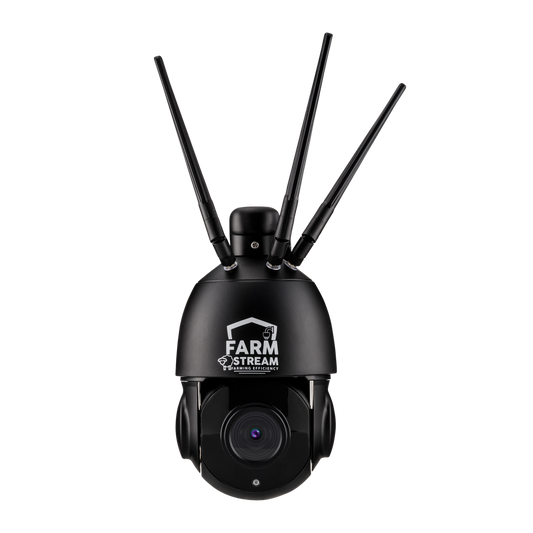
The challenge? Allotments have no WiFi, no mains power, and often no buildings suitable for traditional CCTV. That's exactly why we built the Farmstream Solar 360 Mini — a solar-powered, 4G-connected allotment security camera that works anywhere with a mobile signal, with no compulsory subscription.
This guide explains how to protect your plot, shed, or whole allotment site with off-grid CCTV — whether you're an individual tenant or a committee securing the site for everyone.
Why Allotments Need Security Cameras
Allotments are uniquely easy targets. They're unattended overnight, usually unlit, often screened by hedges and fences that hide intruders as effectively as they mark the boundary — and every plot has a shed full of tools. The problems site committees deal with fall into four groups:
- Shed break-ins: Mowers, strimmers, rotavators, cultivators, and hand tools are the main prize. Sheds and communal cabins are forced in minutes, and the damage often costs more than what's taken.
- Produce theft: Fruit and vegetables stolen just as they ripen — "as soon as you grow the plants, the next day you come and they're gone," as one Enfield committee member described it. Months of work gone in one night.
- Vandalism: Smashed greenhouses, trampled beds, damaged polytunnels, and graffiti. The Allotment Garden security guide notes most vandalism is casual, happens at night, and is often committed by bored youngsters rather than professional thieves — which makes it almost impossible to predict, but very easy to deter.
- Trespass and fly-tipping: Unauthorised access through cut fences, rubbish dumped by gates, and repeat visits once a site gets a reputation as an easy touch.
Allotment CCTV gives you three layers of protection:
- Deterrence: A visible camera and signage change the risk calculation. Casual vandals and opportunist thieves move on to easier sites.
- Detection: Smart motion alerts tell you or your committee the moment someone is on site after dark — so someone can check the live feed, challenge them through the camera, or call 101.
- Evidence: Timestamped HD footage of faces, vehicles, and number plates turns "someone broke in again" into a police report that can actually be acted on, and supports insurance claims for tools and equipment.
But traditional wired CCTV simply doesn't work on allotments: no mains power, no broadband, and no way to run cable across a site of individual plots. What you need is a camera that's entirely self-contained. That's where solar-powered 4G cameras come in.
Why the Solar 360 Mini Is Ideal for Allotments
The Farmstream Solar 360 Mini was designed for exactly these conditions. At just £199, it's a fully self-contained off-grid security camera that runs entirely on solar power and connects via 4G — no wiring, no broadband, and no electrician needed.
Here's why plot holders and allotment committees are choosing it:
- Completely off-grid: The included 26 W solar panel and built-in battery keep the camera running 24/7 — even through overcast UK winters.
- No WiFi needed: The built-in eSIM auto-connects to the strongest 4G network in your area (EE, Vodafone, Three, or O2).
- 3MP HD video (2560 × 1920): Sharp enough to identify faces at the gate and number plates in the lane.
- 355° pan and 90° tilt: Sweep the whole site — plots, paths, sheds, and the gate — from a single camera position.
- Auto-tracking: Detects human movement and automatically follows intruders across the site.
- 20–30 m infrared night vision: Clear footage after dark — when almost all allotment crime happens.
- Two-way audio: Challenge intruders through the camera's built-in speaker. Being spoken to by a camera at 1 am is usually enough to end the visit.
- Smart push alerts: Get notified on your phone the moment motion is detected on site.
- 64 GB on-board storage: Records approximately 2–3 weeks of continuous 24/7 footage (upgradeable to 256 GB) — no cloud subscription required.
- IP66 weatherproof: Built for exposed sites, driving rain, and everything a UK winter throws at it.
- Portable and relocatable: Move it between your shed, the gate, or the far corner as trouble spots move — or take it with you if you give up your plot.
For larger sites, you can pair the Solar 360 Mini with the Farmstream 360 (4K PTZ) for long-range coverage of entrances and access lanes.
A Shed Security Camera Without WiFi
Search for shed cameras and you'll find plenty of cheap indoor WiFi cameras — all useless on an allotment, because there's no WiFi to connect them to and no socket to power them. A genuine shed security camera without WiFi needs two things: its own connection and its own power.
The Solar 360 Mini has both built in:
- Its own connection: The built-in eSIM connects straight to 4G, auto-selecting the strongest network at your site. If your phone gets signal at the allotment, the camera will work.
- Its own power: The included 26 W solar panel and internal battery mean no mains, no generator, and no carting batteries home to charge.
How 4G data works with allotment cameras:
- The camera records 24/7 to its internal 64 GB SD card — this uses zero 4G data.
- 4G data is only used when you view live or recorded footage through the CamHipro app.
- Push notifications (motion alerts) use negligible data.
Farmstream's 4G Streaming Plan costs just £89/year and includes 50 hours of live viewing — plenty for checking overnight alerts and having a look at the plot from home. The camera is also fully unlocked, so you're free to use your own data SIM if you prefer.
Mount it under the eaves of your shed facing the door, or on a short pole covering the shed and beds together, and your plot is watched around the clock.
Solar-Powered CCTV: No Electricity on Site? No Problem

Very few allotment sites have any electricity at all — and where a communal building has a supply, running cable out to individual plots is a non-starter.
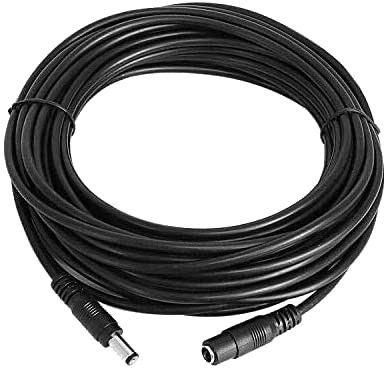
The Solar 360 Mini solves this entirely. It ships with a 26 W solar panel (400 mm × 350 mm) and a 2 m cable, so you simply mount the panel in an unshaded spot near the camera and you're done. The built-in battery stores enough energy to keep the camera running through the night and on cloudy days.
Thanks to intelligent power management and energy-efficient standby modes, the camera remains operational year-round — including the short, dark days of winter, when plots are visited least and long dark evenings give intruders the most cover.
One tip for allotments: mount the solar panel within 2 m of the camera (the cable can't be extended) and keep it clear of hedges, fruit trees, and bean poles that will shade it as the season progresses. A spot above head height also keeps it out of casual reach.
Costs Compared: Solar 4G Cameras vs Subscription Cameras & Wired CCTV
When the Enfield plot holders funded their own security, one paid around £180 for cameras plus a £15-a-month subscription — that's £180 every year, forever, on top of the hardware. Here's how the options stack up:
| Solar 360 Mini | Subscription WiFi camera | Installed wired CCTV | |
|---|---|---|---|
| Upfront cost | £199 (you own it) | £100–£200 | £1,000+ per camera position |
| Ongoing cost | £89/year (optional 4G plan) | £120–£180/year cloud subscription | Maintenance contracts, electricity |
| Works with no WiFi | Yes — built-in 4G eSIM | No — needs broadband on site | Needs broadband for remote viewing |
| Works with no mains power | Yes — solar + battery | Battery models need recharging | No — mains required |
| Recording without subscription | Yes — 24/7 to SD card | Often clips-only without paying | Yes — to DVR |
| Self-install | Yes — under 10 minutes | Yes | No — engineer visit required |
| Repositionable as trouble moves | Yes — relocate in minutes | Only within WiFi range | No — fixed positions |
Over three years, the Solar 360 Mini with the optional streaming plan costs £466 — and recording to the SD card is free forever, so a camera used purely for evidence costs £199 full stop. A subscription WiFi camera (even if you could connect it) costs a similar amount in fees alone, and a single wired camera position costs more than covering an entire site with five Farmstream cameras.
Put another way: one camera costs less than replacing one decent mower — and a fraction of the £4,000 cultivator stolen in Enfield.
Mounting Options: Sheds, Poles, Gates & Communal Areas

The Solar 360 Mini ships with pole mount fixings, screws, and fittings — so installation is straightforward without specialist tools. Common mounting spots on allotments include:
- Your shed: Under the eaves facing the door, or on the gable end covering the shed and your beds together. The panel sits on the roof's sunny side.
- A pole on your plot: A 3–4 m timber post gives a panoramic view — the 355° pan covers your plot and your neighbours' too.
- The site gate: Capture everyone (and every vehicle) entering or leaving. Most tool thefts involve a vehicle parked close by, and a gate camera records the number plate.
- Communal buildings: Trading huts, committee cabins, and toilet blocks are elevated, central, and — as the Banbury break-in showed — targets themselves.
- Known weak points: The stretch of fence that keeps getting cut, the dark back corner, the boundary by the footpath.
Because the camera is completely self-contained, you can relocate it in minutes — just unbolt, move, and remount. If trouble moves from the gate to the back fence, the camera moves with it. It reconnects to 4G automatically.
Securing a Whole Site: Cameras for Committees & Associations
Individual plot holders can protect a shed with one camera — but allotment associations get the most from a small shared setup, funded from site fees or a small levy per tenant. A typical layout for a 50–120 plot site:
- Camera 1 — the gate: Every person and vehicle in or out, number plates included.
- Camera 2 — the communal building: Covering the trading hut or cabin and the central paths.
- Camera 3 — the vulnerable boundary: Wherever the fence keeps getting cut or vandals get in.
Three cameras cost £597 one-off — a few pounds per tenant on most sites, and less than one year of most commercial monitoring contracts. Because there's no limit on connected devices, the whole committee can have the CamHipro app: whoever lives nearest responds to the 2 am alert, checks the live feed, and speaks through the camera or calls 101. That's a genuinely shared watch rota with nobody leaving the house.
It's also a strong story for your next AGM or council conversation: Enfield Council's response to four years of thefts was that "our budget is limited" — sites that wait for someone else to fund security tend to wait a long time.
Setup in Under 10 Minutes
The Solar 360 Mini is a true plug-and-play allotment camera. No IT knowledge, no network configuration, and no specialist installer required.
Four steps to get your plot secured:
- Mount the camera where there's good 4G coverage — shed, pole, gate post, or communal building.
- Mount the solar panel in an unshaded spot within 2 m of the camera.
- Download the free CamHipro app on your phone and scan the QR code on the camera.
- Start viewing, recording, and receiving alerts — you're live.
Multiple devices can connect to the same camera, so committee members, site reps, and neighbouring plot holders can all keep an eye on the site from their own phones.
Beyond Cameras: Police-Backed Allotment Security Tips

A camera works best as part of a layered approach. Police forces regularly issue guidance on securing allotments and outbuildings, and Avon & Somerset Police's garden security advice sums up the principle: criminals won't target a site if the risk of being seen, noticed, and caught is too great. Alongside your camera:
- Don't store what you can't afford to lose. Take expensive power tools home; what stays in the shed should be locked, marked, and photographed.
- Harden the shed: A closed-shackle padlock on a bolted-through hasp, coach bolts (not screws) on hinges, and frosted or boarded windows so tools aren't on display.
- Mark your property: Postcode-mark tools and log serial numbers — marked tools are harder to sell and easier to return.
- Maintain the perimeter: Repair fence cuts immediately, lock the gate consistently, and plant thorny species like hawthorn or pyracantha along vulnerable boundaries — the Allotment Garden guide recommends them as a long-term deterrent.
- Build the community: The same guide's strongest advice is social — well-used sites with engaged neighbours and local kids involved in growing suffer far less vandalism. A camera plus a busy, cared-for site is a powerful combination.
- Report everything: Every incident, every time, on 101 — reported crime is how sites get police attention and how patterns get spotted.
Is CCTV Allowed on Allotments? GDPR & Site Rules
Yes — thousands of UK allotments now use CCTV — but two things to get right:
1. Check your site rules first. On council-owned or association-managed sites, check your tenancy agreement or have a quick word with the committee before mounting a camera. Most committees are delighted — many will want to turn one plot holder's camera into a site-wide scheme.
2. Comply with UK GDPR. Where members of the public (including fellow plot holders) may be recorded:
- Signage: Display clear signs at the gate and around the site notifying visitors that CCTV is in operation. Signage is itself a proven deterrent.
- Data control: Store recordings securely and limit access to authorised people — the plot holder, committee, or site rep.
- Privacy zones: Point cameras at your own plot, sheds, paths, and gates — not at neighbouring gardens, homes, or the public street beyond the boundary.
The Solar 360 Mini stores all footage locally on its on-board SD card, and remote viewing through the CamHipro app uses a secure encrypted connection — helping plot holders and committees stay GDPR-compliant while protecting the site.
If the worst happens, report break-ins to the police on 101 (999 if a crime is in progress), get a crime reference number, and hand over your footage — timestamped HD video of faces, vehicles, and number plates transforms the strength of a report.
FAQs
How much does an allotment security camera cost?
The Solar 360 Mini is a one-off purchase of £199. The optional 4G streaming plan is £89/year (50 hours of live viewing). Recording 24/7 to the SD card uses no data at all, and there's no compulsory subscription. The camera is fully unlocked if you'd prefer to use your own SIM.
Do I need WiFi on my allotment for a security camera?
No. The Solar 360 Mini is a true shed security camera without WiFi — it connects directly to 4G using its built-in eSIM, which auto-selects the strongest network at your site. No broadband, no router, no WiFi required.
How do I power a camera on a site with no electricity?
Entirely by solar. The included 26 W panel and built-in battery keep the camera running 24/7, with no generator and no carting batteries home to charge.
Will a solar security camera work through a UK winter?
Yes. The panel is designed for UK light conditions and the built-in battery covers overnight and overcast periods. The camera automatically adjusts its power usage for shorter daylight hours — when allotments are at their quietest and most vulnerable.
Is CCTV allowed on allotments?
Yes, provided you comply with UK GDPR: display clear CCTV signage, store recordings securely, limit access to authorised people, and avoid pointing cameras at neighbouring gardens or homes. On council or association sites, check your tenancy agreement or ask the committee first.
Can our whole committee view the same camera?
Yes. There's no limit on the number of devices that can connect to a single camera. Each committee member just needs the free CamHipro app and the camera's login details — so whoever lives nearest can respond to an overnight alert.
How much footage does the camera store?
The included 64 GB SD card holds approximately 2–3 weeks of continuous 24/7 recording. You can upgrade to a 256 GB card for longer retention. Once full, the oldest footage is automatically overwritten.
How do I stop the camera itself being stolen?
Mount it out of easy reach (3–4 m high) on a pole or communal building, and use the included pole mount fixings with anti-tamper bolts. Position it to cover the gate or main track — anyone approaching is recorded long before they reach it, and the footage is already saved on board.
What should I do if my shed is broken into?
Report it to the police on 101 (999 if a crime is in progress) and get a crime reference number, tell your committee or council, and photograph the damage before tidying up. Then hand over your camera footage — it makes a police report far more likely to lead to action, and supports any insurance claim.
Can I use the camera for more than security?
Absolutely. Plot holders use the remote pan and tilt to check the greenhouse after a storm, see whether the water's on, check if a frost has hit, and settle the "did I shut the shed door?" question — all without leaving the house.
Protect Your Plot — From £199
The Solar 360 Mini gives you 5MP HD allotment security with pan, tilt, auto-tracking, and two-way audio — powered entirely by solar and connected via 4G. No WiFi, no mains power, no compulsory subscription, no specialist installation. Mount it on the shed and go. At £199 — less than the cost of replacing one stolen mower — it watches your plot every night of the year.

Free UK shipping · Same-day dispatch before 2 pm (Mon–Fri) · 30-day money-back guarantee · UK-based phone support